
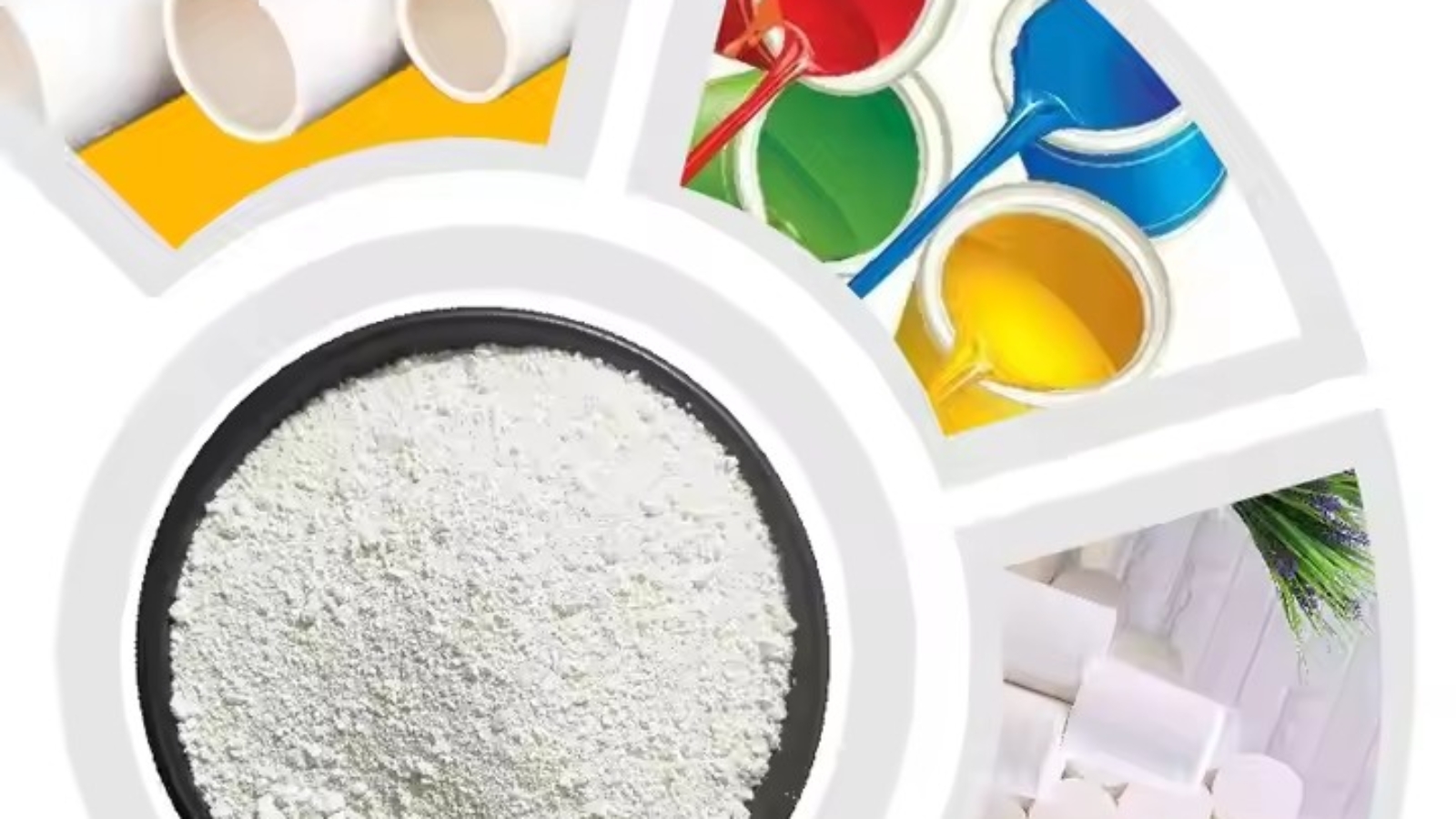
Calcium carbonate is one of the most widely used functional fillers in the paint and coatings industry. From architectural paints to industrial coatings, it plays a crucial role in balancing performance, cost, and processing efficiency. But why do so many coating manufacturers rely on calcium carbonate, and what benefits does it really bring?
This article answers the most frequently asked questions about calcium carbonate in coatings, helping formulators make better material choices.
What Does Calcium Carbonate Do in Coatings?
In coatings, calcium carbonate primarily acts as a functional extender pigment rather than just a low-cost filler.
Its main functions include:
- Improving film thickness and coverage
- Enhancing mechanical strength and hardness
- Adjusting gloss and surface smoothness
- Controlling rheology and viscosity
- Reducing overall formulation cost
When properly selected and dispersed, calcium carbonate can significantly improve coating performance without compromising quality.
How Does Calcium Carbonate Improve Paint Performance?
High-quality calcium carbonate contributes to coatings in several important ways:
1. Better Opacity and Hiding Power
Fine and ultra-fine calcium carbonate particles help optimize pigment spacing, improving light scattering and enhancing hiding power—especially when used alongside titanium dioxide (TiO₂).
2. Improved Flow and Application
Low oil absorption calcium carbonate reduces binder demand, leading to:
- Lower viscosity
- Better leveling
- Easier brushing, rolling, or spraying
3. Enhanced Mechanical Properties
Calcium carbonate improves:
- Film hardness
- Abrasion resistance
- Scratch resistance
This is particularly important for industrial, floor, and protective coatings.
Is Calcium Carbonate Suitable for Water-Based and Solvent-Based Coatings?
Yes. Calcium carbonate is widely used in both water-based and solvent-based coating systems, but the grade selection is critical.
- Water-based coatings benefit from fine particle size, good dispersibility, and surface-treated grades to improve stability.
- Solvent-based coatings often prefer calcium carbonate with low oil absorption, which helps reduce viscosity and prevent settling.
Modified or coated calcium carbonate performs especially well in high-performance formulations.
What Is the Difference Between Ground and Precipitated Calcium Carbonate in Paint?
Ground Calcium Carbonate (GCC)
- Made from natural limestone
- Cost-effective
- Widely used in architectural and general industrial coatings
Precipitated Calcium Carbonate (PCC)
- Synthetic, with controlled particle shape and size
- Higher purity and consistency
- Used in high-end or specialty coatings
Choosing between GCC and PCC depends on performance requirements, budget, and coating application.
Does Calcium Carbonate Reduce Paint Costs Without Lowering Quality?
Yes—when used correctly.
Calcium carbonate allows formulators to:
- Partially replace expensive pigments
- Maintain stable performance
- Improve processing efficiency
High-quality calcium carbonate does not simply dilute paint, but instead enhances structure and functionality, making it a smart cost-performance solution.
How to Choose the Right Calcium Carbonate for Coatings?
Key factors to consider include:
- Particle size and distribution
- Whiteness and purity
- Oil absorption value
- Surface treatment (modified vs unmodified)
- Application system (interior, exterior, industrial)
Selecting the right grade ensures better dispersion, stable storage, and consistent coating quality.
Conclusion
Calcium carbonate is far more than a basic filler in coatings. It is a versatile functional material that improves performance, optimizes formulation costs, and supports efficient production. As coating technologies continue to evolve, high-quality and surface-modified calcium carbonate will play an even more important role in modern paint systems.
For coating manufacturers, choosing the right calcium carbonate means achieving a better balance between performance, cost, and sustainability.
Add a Comment