
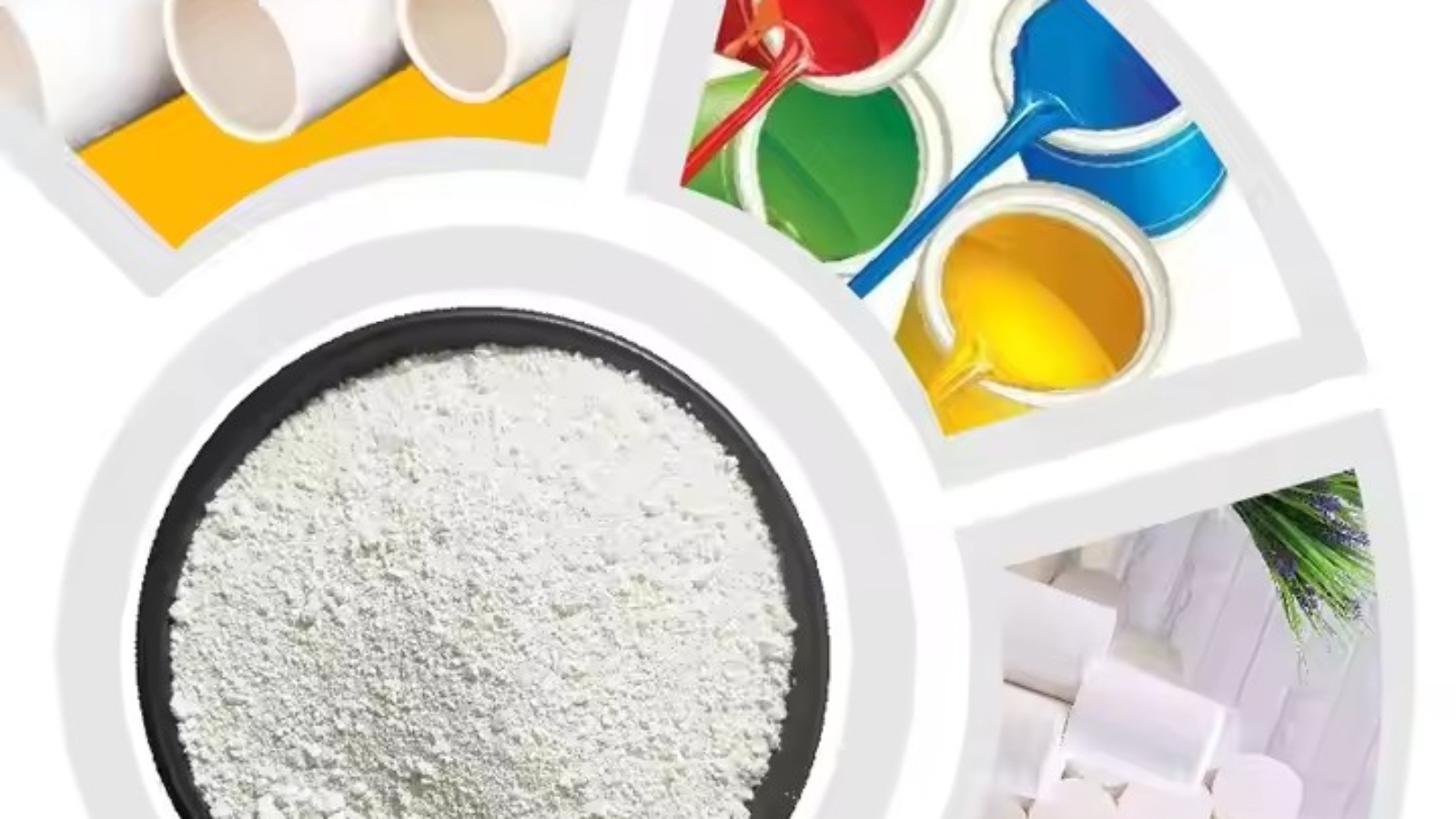
Calcium carbonate is one of the most widely used minerals in modern industry. Known for its whiteness, purity, and versatility, this mineral appears in countless products — from construction materials to plastics, paper, paints, and even food. Despite new materials entering the market, calcium carbonate remains a key ingredient in many everyday and industrial applications.
1. Plastics and Polymers
Calcium carbonate is one of the most popular filler materials in plastics. It improves mechanical strength, enhances surface gloss, and reduces production costs.
You can find it in:
- PVC pipes and profiles
- Polypropylene (PP) and polyethylene (PE) films
- Automotive parts and cables
Adding fine calcium carbonate also helps improve heat resistance and dimensional stability during processing.
2. Paints, Coatings, and Inks
In the paint and coatings industry, calcium carbonate acts as a pigment extender and rheology modifier. It improves opacity, brightness, and durability while reducing formulation costs.
Common applications include:
- Wall paints and emulsions
- Industrial coatings
- Printing inks and sealants
3. Paper and Packaging
The paper industry has long relied on precipitated and ground calcium carbonate (PCC and GCC) as fillers and coating pigments. They make paper smoother, brighter, and more opaque.
Calcium carbonate is essential in:
- High-quality printing paper
- Cardboard and packaging materials
- Recycled paper products
4. Construction and Building Materials
Calcium carbonate is a fundamental component in cement, concrete, and lime production. It enhances workability and strength in building materials and serves as a filler in adhesives and sealants.
You’ll find it in:
- Tiles and flooring compounds
- Wall putty and decorative coatings
- Ready-mix concrete and mortar
5. Rubber and Elastomers
In the rubber industry, calcium carbonate acts as a reinforcing filler that improves hardness, tensile strength, and wear resistance. It’s widely used in:
- Shoe soles
- Rubber hoses and belts
- Sealing gaskets and tires
6. Food, Pharmaceuticals, and Personal Care
In the food industry, calcium carbonate functions as a dietary calcium supplement, acidity regulator, and anti-caking agent. It is found in chewing gum, baking powder, and dairy products.
Pharmaceutical companies use it in tablet formulations and antacids.
In personal care, it serves as a mild abrasive in toothpaste and as a gentle scrubbing agent in cleansers and cosmetics.
7. Environmental and Agricultural Uses
Calcium carbonate plays an important role in environmental protection — it helps neutralize acidic water and soil, and is used in flue gas desulfurization to reduce industrial emissions.
In agriculture, it’s commonly applied as agricultural lime to balance soil pH and improve fertility.
Why Calcium Carbonate Is Still Indispensable
Even with the rise of synthetic fillers and additives, calcium carbonate remains unmatched in affordability, safety, and multifunctionality.
It offers:
- High whiteness and purity
- Excellent dispersion and stability
- Compatibility with a wide range of materials
- Environmentally friendly performance
Conclusion
From construction materials to plastics, paints, food, and paper — calcium carbonate continues to support industries worldwide. Its balance of performance, safety, and cost efficiency ensures it remains one of the most trusted and widely used minerals in manufacturing today.
Add a Comment