
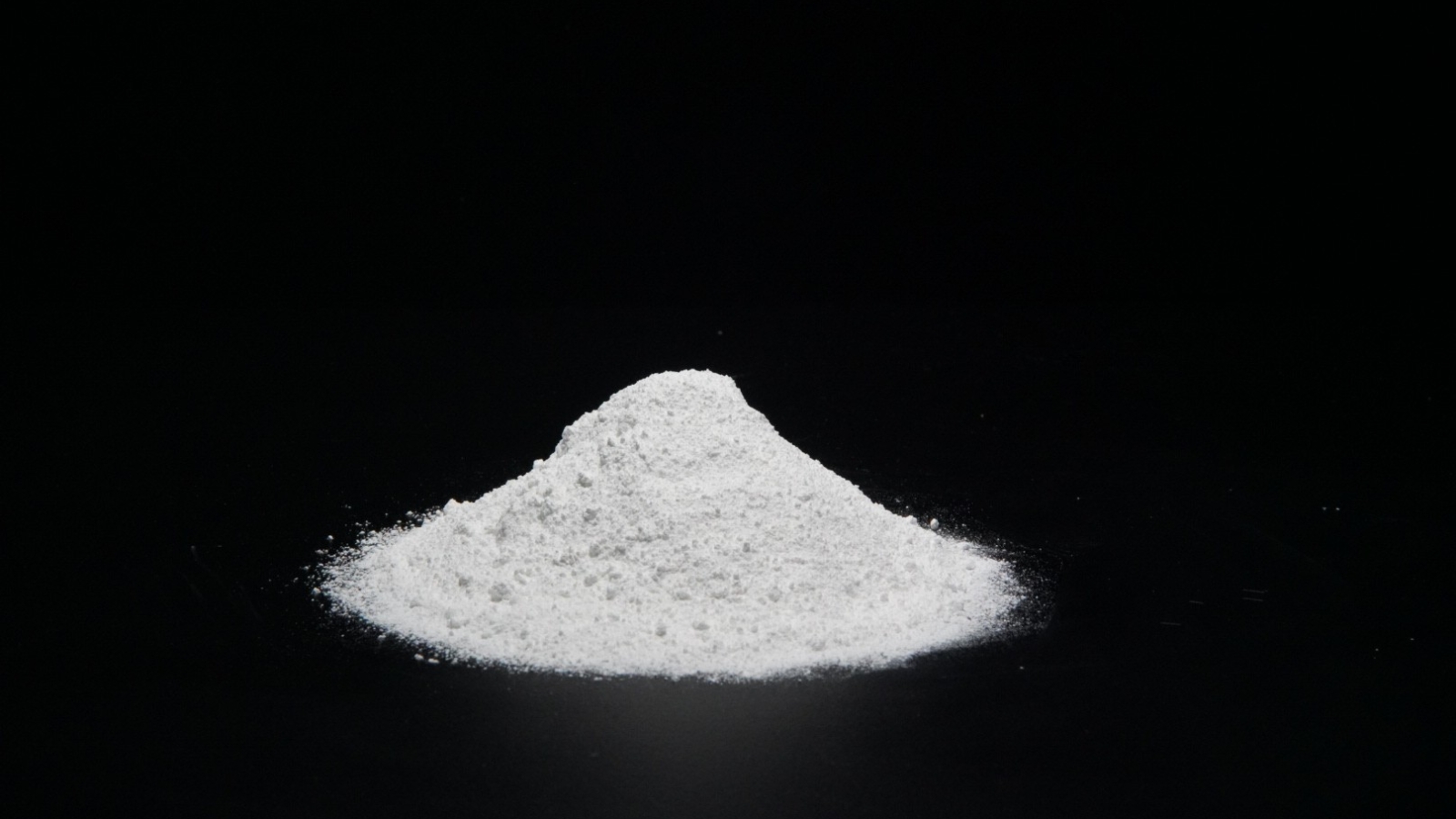
PCC calcium carbonate, short for Precipitated Calcium Carbonate, is a highly refined and synthetically produced form of calcium carbonate (CaCO₃). Unlike ground calcium carbonate (GCC), which is derived directly from natural limestone or marble, PCC is chemically manufactured, offering greater control over purity, particle size, and shape. This makes it an advanced functional additive widely used in industries that require consistent performance and high brightness.
How is PCC Calcium Carbonate Produced?
PCC is produced through a controlled chemical reaction. The most common method involves the reaction of quicklime (CaO) with water to form slaked lime (Ca(OH)₂), which is then carbonated with carbon dioxide (CO₂) to produce calcium carbonate in a fine, pure crystalline form:
Ca(OH)₂ + CO₂ → CaCO₃ + H₂O
This precipitation process allows precise control over crystal morphology, particle size distribution, and surface area. Depending on the application, PCC can be produced in scalenohedral, rhombohedral, or spherical crystal forms.
Key Properties of PCC Calcium Carbonate
- Particle Size Control: Ultra-fine particles as small as sub-micron
- High Purity: Typically above 99% CaCO₃
- Exceptional Whiteness: Ideal for bright and clean formulations
- High Surface Area: Increases reactivity and binding ability
- Consistent Quality: Uniform particle shape and size
These properties make PCC ideal for high-performance applications where consistency, brightness, and functionality are critical.
Applications of PCC Calcium Carbonate
PCC is widely used in industries that require not only a filler but also a performance-enhancing material:
1. Paper Industry
PCC is extensively used as a filler and coating pigment in paper manufacturing. It enhances brightness, opacity, smoothness, and ink absorption. Its uniformity and fine particle size also help improve print quality and reduce production costs.
2. Plastics
In thermoplastics such as PVC, PP, and PE, PCC improves impact resistance, tensile strength, and dimensional stability. Its fine particle size allows better dispersion and interaction with polymer chains.
3. Rubber
PCC enhances mechanical properties, increases hardness, and improves tear resistance in rubber compounds. It is used in products such as tires, mats, and gaskets.
4. Paints and Coatings
PCC acts as a functional pigment, providing superior whiteness, gloss control, and viscosity stability. It is commonly used in water-based coatings and decorative paints.
5. Pharmaceutical and Food Industries
Due to its high purity and non-toxic nature, food-grade PCC is used as a calcium supplement and acidity regulator in dietary products, toothpaste, tablets, and chewing gum.
Benefits of Using PCC Calcium Carbonate
- Superior brightness and whiteness
- Tailored particle size and crystal shape
- Better dispersion in complex formulations
- High purity and safety for sensitive applications
- Enhances product performance across industries
Conclusion
PCC calcium carbonate is a precision-engineered material designed for applications that demand consistency, purity, and performance. With its controlled chemical structure and versatile properties, PCC serves as both a high-performance additive and a cost-effective filler in paper, plastics, paints, pharmaceuticals, and more. As industries move toward smarter, more sustainable materials, PCC continues to be a preferred choice for quality-driven manufacturers worldwide.
Add a Comment