
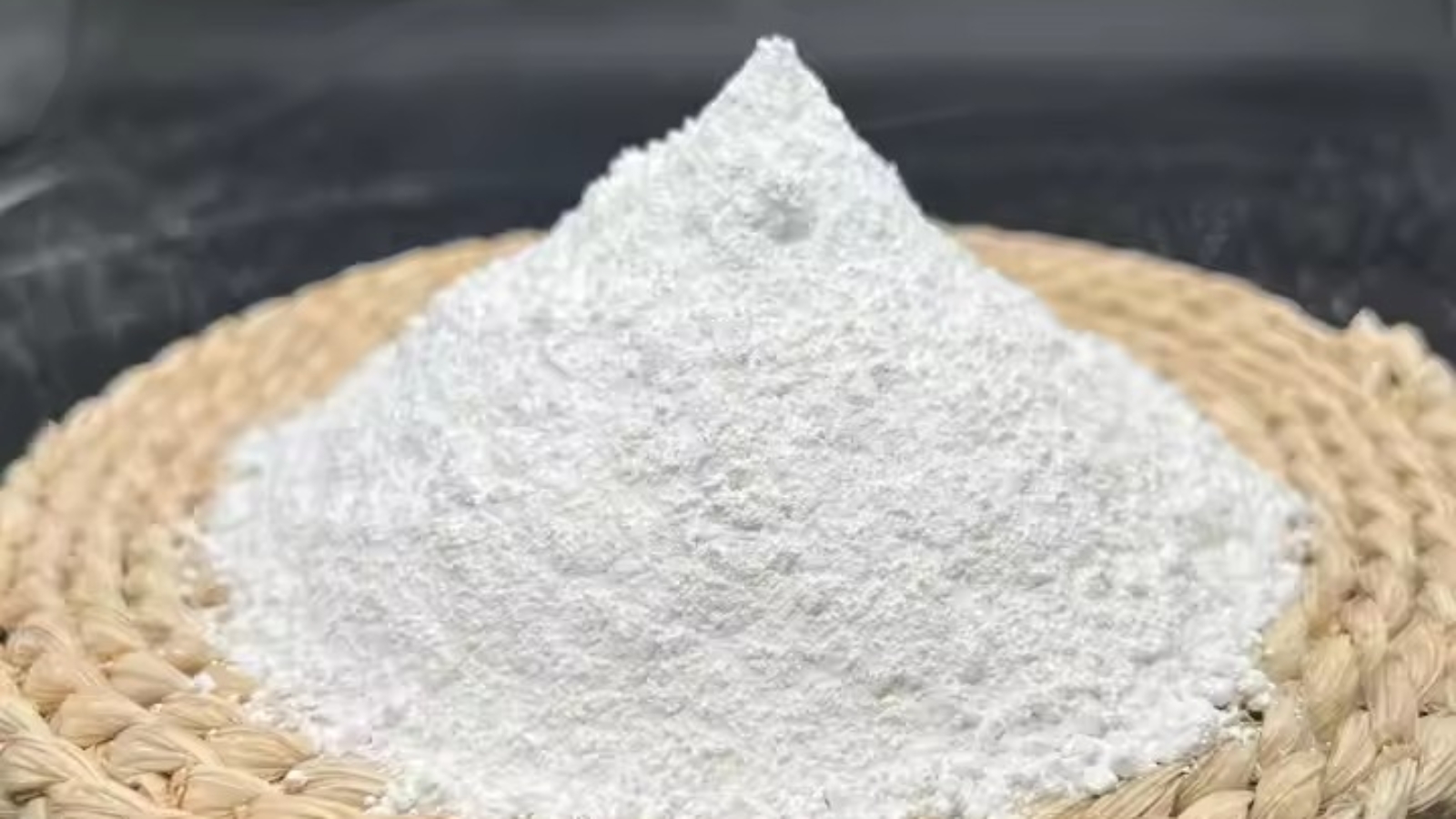
Hydrophilic Suspended Calcium Carbonate (HSCC) is a modified form of calcium carbonate engineered to disperse easily in water-based systems. Unlike traditional calcium carbonate—which tends to clump and sink—HSCC features a hydrophilic surface treatment that keeps particles suspended, improves uniformity, and enhances performance in various industrial applications.
This article explains what HSCC is, how it is produced, its key benefits, and why manufacturers across coatings, adhesives, plastics, papermaking, and daily chemical industries are increasingly choosing this advanced filler.
What Is Hydrophilic Suspended Calcium Carbonate?
Hydrophilic Suspended Calcium Carbonate is a surface-modified CaCO₃ powder designed to interact easily with water. Through special chemical treatments, the particle surface acquires hydrophilic functional groups, allowing it to stay suspended in liquids without rapid sedimentation.
In simple terms:
HSCC = calcium carbonate that mixes smoothly with water and stays evenly dispersed.
This makes it highly suitable for products that require stable aqueous formulations.
How Is HSCC Produced?
The production of HSCC typically includes:
- Selection of high-purity calcium carbonate (usually ground or precipitated forms).
- Surface treatment process using hydrophilic agents such as silicates, phosphates, polymeric dispersants, or other water-affinity modifiers.
- Controlled particle-size processing to achieve narrow distribution and fine particle sizes.
- High-shear dispersion and drying to ensure consistent performance in suspension.
The result is a calcium carbonate powder with high surface energy toward water, excellent dispersion behavior, and low settling.
Key Properties of Hydrophilic Suspended Calcium Carbonate
- Excellent water dispersibility – easily wets and disperses without forming lumps.
- Low sedimentation rate – stays suspended longer in paints, slurries, or liquid systems.
- Fine and uniform particle size – improves texture, smoothness, and stability.
- High whiteness and purity – enhances brightness and appearance in final products.
- Good compatibility – works well with binders, resins, pigments, and surfactants.
These features make HSCC superior to conventional ground or coated calcium carbonate for water-based applications.
Main Applications of Hydrophilic Suspended Calcium Carbonate
1. Water-Based Paints and Coatings
HSCC enhances the smoothness, hiding power, and stability of architectural and industrial coatings. It prevents sedimentation in buckets and improves color dispersion.
2. Adhesives and Sealants
In adhesive pastes, HSCC provides better viscosity control, smooth application, and increased yield value without affecting bonding performance.
3. Papermaking
HSCC improves paper brightness, opacity, smoothness, and printability. Its suspension ability helps maintain uniform coating formulations.
4. Plastics and Masterbatch
Although mainly suited for liquid systems, HSCC is also used in certain water-granulation pelletizing processes and as a dispersible functional filler.
5. Daily Chemicals and Personal Care
It is used in toothpaste, detergents, polishes, and other household products where high whiteness and good water compatibility are essential.
6. Ceramic Slurries
HSCC offers better rheology, stability, and particle distribution in ceramic slip preparation.
Advantages Compared to Ordinary Calcium Carbonate
| Performance | HSCC | Ordinary CaCO₃ |
|---|---|---|
| Water dispersibility | ★★★★★ | ★★☆☆☆ |
| Sedimentation resistance | ★★★★★ | ★★☆☆☆ |
| Slurry stability | High | Medium–Low |
| Particle uniformity | Fine & narrow | Often wide |
| Compatibility | Strong | Moderate |
| Processing convenience | Easy wetting, low energy | Needs more dispersant & mixing time |
Because of these advantages, HSCC reduces formulation costs by lowering dispersant usage and improving production efficiency.
Why Manufacturers Prefer Hydrophilic Suspended Calcium Carbonate
Global manufacturers in coatings, adhesives, and papermaking increasingly adopt HSCC due to:
- Fewer defects and sedimentation issues
- Improved product stability and shelf life
- Better final appearance and surface quality
- Reduced production cost through easier dispersion
- Enhanced environmental performance (supports water-based, low-VOC systems)
As industries move toward sustainable and water-based technologies, HSCC is becoming a preferred filler choice.
Conclusion
Hydrophilic Suspended Calcium Carbonate is a highly efficient, water-compatible filler that solves the common challenges of dispersion and sedimentation found in traditional calcium carbonate. Its unique properties make it ideal for water-based coatings, adhesives, papermaking, ceramics, and other industries requiring stable aqueous systems.
For manufacturers seeking better stability, smoother processing, and improved product performance, HSCC offers a reliable and cost-effective solution.
Add a Comment