
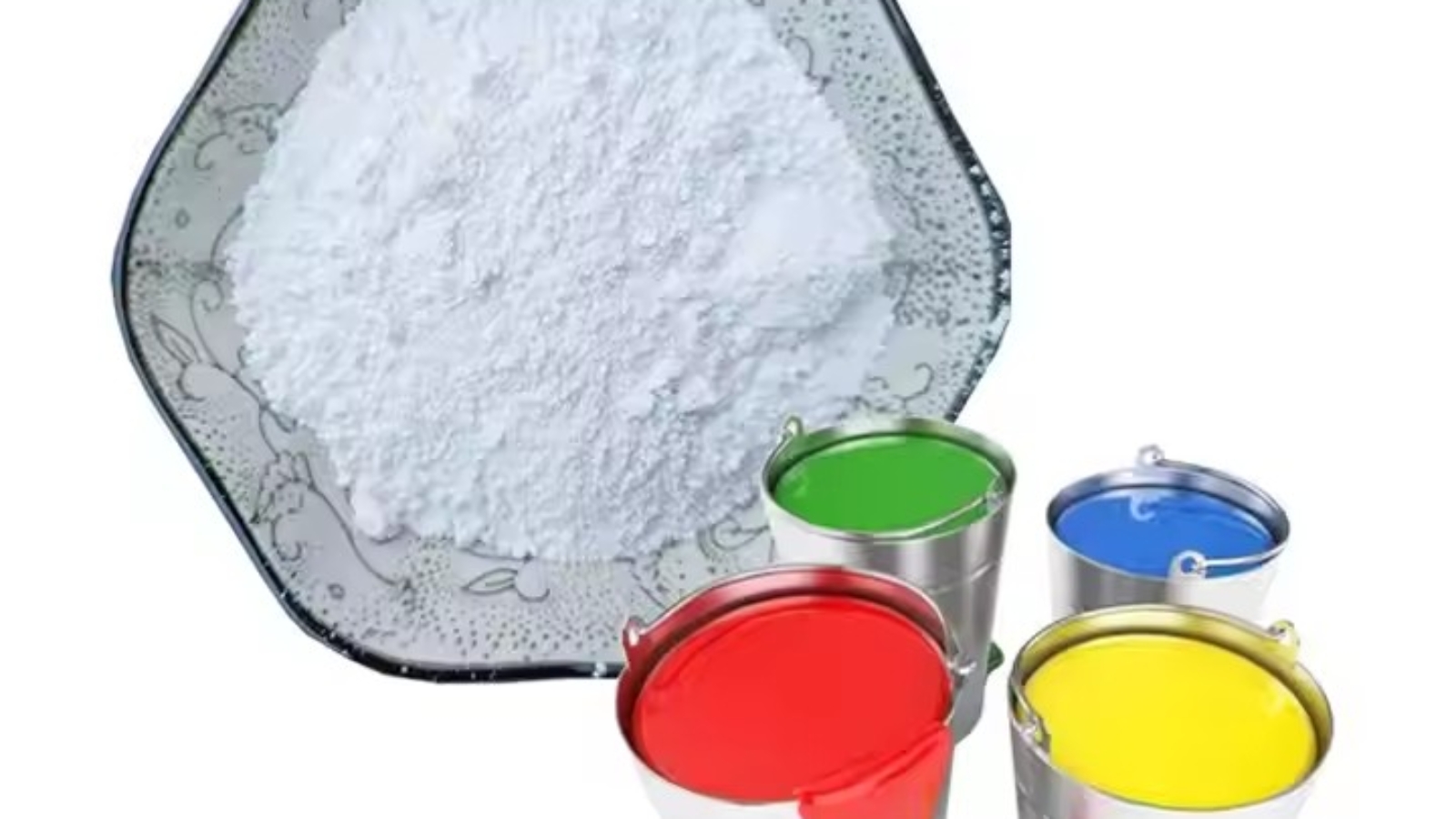
Low oil-absorption active calcium carbonate has become an important functional filler in modern paints and coatings. Compared with traditional ground calcium carbonate, it offers improved performance, easier processing, and better formulation stability. Below is a detailed overview of how it works and why more coating manufacturers are choosing it.
1. What Is Low Oil-Absorption Active Calcium Carbonate?
Low oil-absorption active calcium carbonate is a surface-modified CaCO₃ with a specially treated particle structure.
Because of its lower oil absorption value, it requires less resin or binder to wet the particles. This improves coating efficiency and reduces production cost without compromising quality.
2. Improved Dispersion and Stability
One of the biggest advantages is its excellent dispersibility.
The surface modification allows particles to disperse evenly in both water-based and solvent-based systems. This prevents agglomeration and sedimentation, leading to:
- smoother production
- stable storage performance
- better color uniformity
For large-scale paint factories, better dispersion means fewer grinding steps and lower energy consumption.
3. Reduced Resin Consumption
A lower oil-absorption value directly reduces resin demand.
Since resin is usually the most expensive part of a paint formula, replacing part of it with low oil-absorption active CaCO₃ helps:
- lower material cost
- maintain coating strength
- improve formulation flexibility
Manufacturers can produce coatings with higher solids and better application properties while reducing overall cost.
4. Enhanced Mechanical Properties
Active calcium carbonate with optimized particle size distribution can significantly improve the coating’s mechanical performance, including:
- better film hardness
- improved scratch and abrasion resistance
- increased structural strength of the paint film
This makes it suitable for architectural coatings, industrial paints, and protective coatings.
5. Better Gloss Control and Smoothness
Low oil-absorption CaCO₃ helps create a smoother coating surface.
Because it disperses well and maintains a uniform particle structure, the final paint film provides:
- finer texture
- controlled gloss levels
- improved touch and appearance
For matte and semi-gloss products, it provides stable and consistent gloss performance.
6. Excellent Compatibility With Other Additives
Its surface modification allows better compatibility with:
- resins
- dispersants
- pigments
- anti-settling additives
This improves overall formula stability and prevents issues such as flocculation or color floating.
7. Cost-Effective and High Performance
In coatings, performance must balance with cost.
Low oil-absorption active calcium carbonate provides:
- improved performance compared to ordinary GCC
- reduced resin usage
- lower overall formulation cost
- stable and reliable quality
It is widely used in interior wall paints, exterior wall coatings, primers, putty, road marking paints, and industrial coatings.
Conclusion
Low oil-absorption active calcium carbonate is more than just a filler—it is a functional material that enhances dispersion, reduces resin consumption, strengthens the coating film, and helps control gloss and texture. For paint manufacturers seeking to optimize cost and performance, it is a highly efficient and practical choice.
Add a Comment