
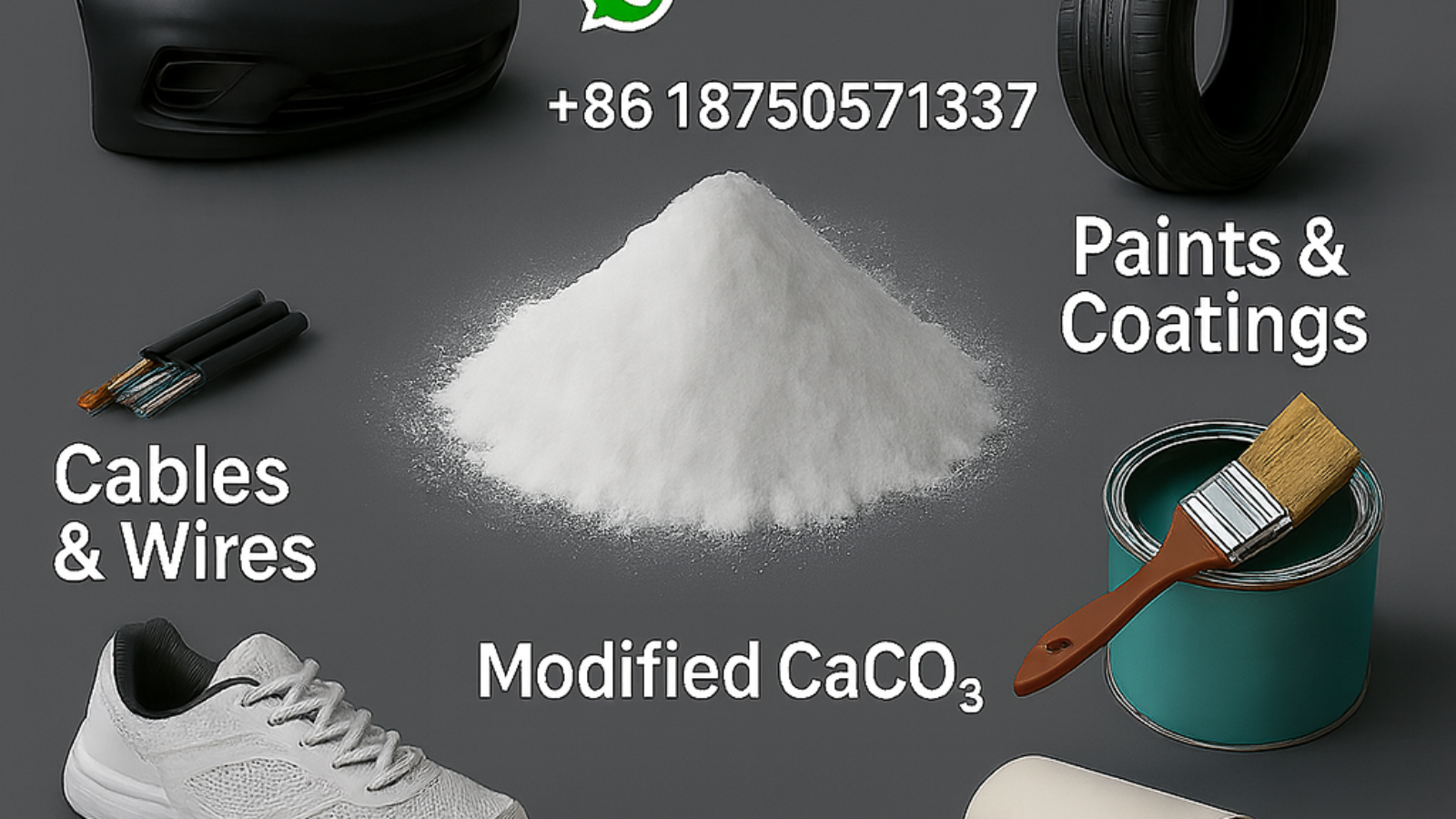
Calcium carbonate is one of the most important and widely used industrial minerals in the world. Available in natural forms such as limestone, marble, and chalk, as well as in precipitated calcium carbonate (PCC), this versatile material plays a vital role in numerous industrial applications. Thanks to its high purity, low cost, excellent whiteness, and chemical stability, calcium carbonate has become a cornerstone of modern manufacturing.
In the plastics industry, calcium carbonate is primarily used as a functional filler and cost reducer. It improves rigidity, dimensional stability, and surface smoothness in products made from PVC, PE, PP, and other thermoplastics. Fine and ultrafine calcium carbonate grades enhance dispersion and processing efficiency, while surface-treated calcium carbonate improves compatibility with polymer matrices. These properties make it ideal for pipes, profiles, films, packaging, and injection-molded parts.
The paper industry is another major application area for calcium carbonate. Both GCC (ground calcium carbonate) and PCC are widely used as fillers and coating pigments. Calcium carbonate increases paper brightness, opacity, and smoothness, while improving ink absorption and print quality. Compared with traditional clay-based fillers, it offers higher light scattering efficiency and better environmental performance, contributing to reduced fiber consumption and lower production costs.
In the paint and coatings sector, calcium carbonate is used to adjust viscosity, improve coverage, and enhance mechanical strength. It serves as an extender pigment that improves film thickness, abrasion resistance, and durability. Calcium carbonate is compatible with water-based and solvent-based coatings, making it suitable for architectural paints, industrial coatings, and protective finishes.
The construction industry relies heavily on calcium carbonate–based materials. It is a key component in cement, concrete, mortar, putty, and dry-mix formulations. Calcium carbonate improves workability, strength development, and surface quality while reducing material costs. In sealants and adhesives, it provides excellent reinforcement, stability, and flow control.
In the rubber industry, calcium carbonate is used as a reinforcing and semi-reinforcing filler. It enhances hardness, tensile strength, and wear resistance while maintaining good elasticity. Rubber products such as footwear, hoses, gaskets, and conveyor belts benefit from improved processing performance and consistent quality.
Calcium carbonate also finds applications in pharmaceuticals, food, and agriculture, where high-purity grades are used as calcium supplements, food additives, and carriers for agrochemicals. In environmental applications, it is used for flue gas desulfurization, water treatment, and pH control due to its alkaline nature.
In summary, calcium carbonate is a multifunctional industrial mineral that supports a wide range of industries. Its adaptability, cost efficiency, and performance advantages make it an essential material in global manufacturing. As industries continue to focus on sustainability and material optimization, the demand for calcium carbonate is expected to grow steadily worldwide.
Add a Comment