
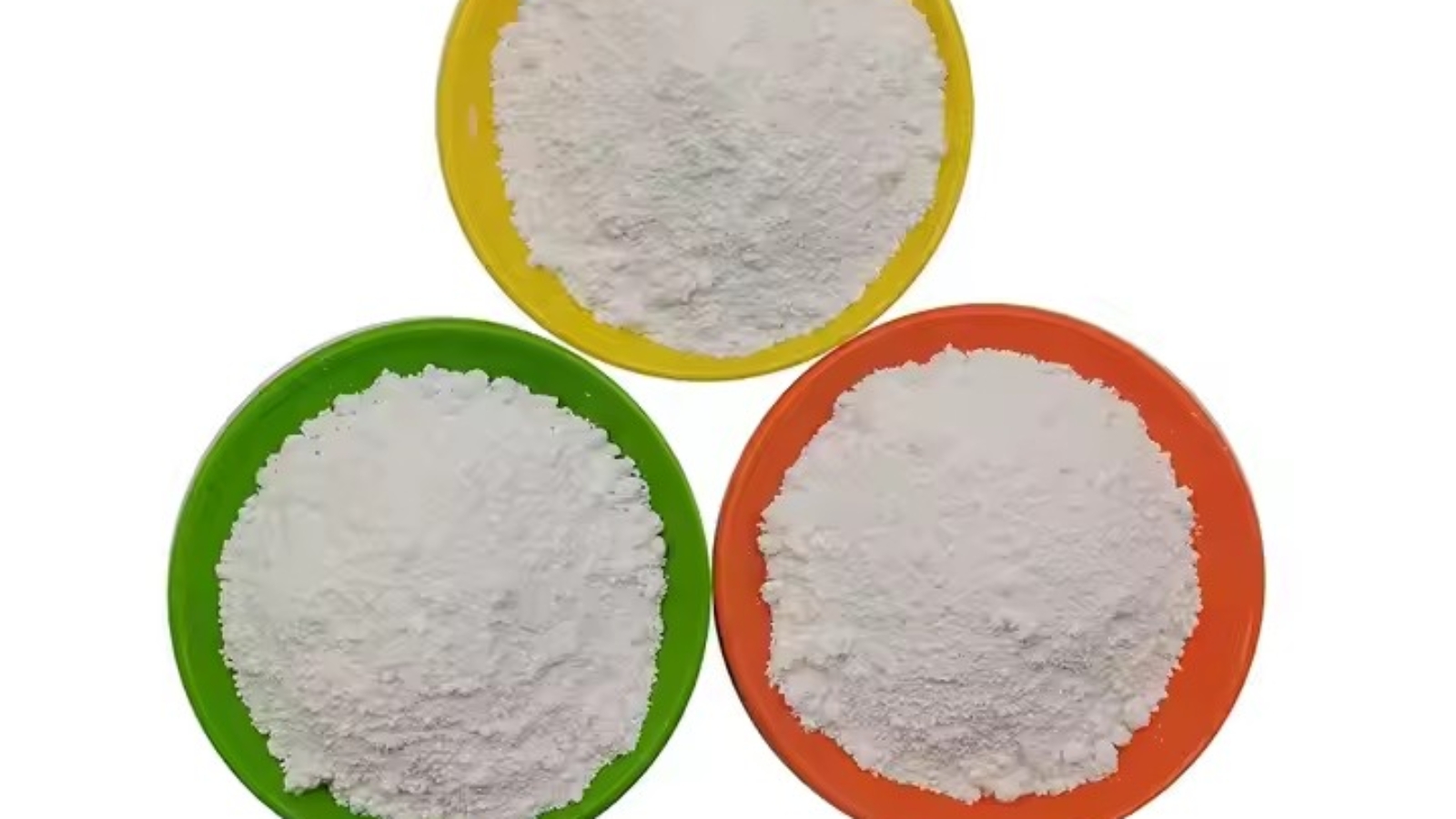
Calcium carbonate (CaCO₃) is one of the most widely used industrial minerals, applied across plastics, paints, paper, rubber, adhesives, construction materials, and many other fields. While it comes in different grades and particle sizes, two main forms dominate industrial applications: heavy calcium carbonate (GCC – Ground Calcium Carbonate) and precipitated calcium carbonate (PCC). Although both share the same chemical formula, their properties, production methods, and applications differ significantly. Understanding these differences helps manufacturers choose the right material for their specific needs.
1. Production Method
- Heavy Calcium Carbonate (GCC):
Heavy calcium carbonate is produced by directly grinding natural limestone, marble, or chalk into fine powder. The process is purely physical, involving crushing, milling, and classification. Because it comes directly from natural sources, the particle shape is irregular and typically larger compared with PCC. - Precipitated Calcium Carbonate (PCC):
PCC is manufactured through a chemical process. Limestone is first calcined into lime (CaO), which is then slaked with water to form calcium hydroxide (Ca(OH)₂). Finally, carbon dioxide is bubbled through the solution, precipitating very fine calcium carbonate particles. This controlled process allows precise adjustment of particle size, shape, and surface properties.
2. Particle Size and Shape
- GCC: Irregular, angular particles with sizes usually in the micron range. Finer grades are available, but grinding has limitations.
- PCC: Uniform, well-controlled particles with different shapes (scalenohedral, rhombohedral, spherical, or needle-like). PCC can be engineered at nano-scale, offering much higher surface area.
3. Physical Properties
- GCC (Heavy Calcium):
- Higher bulk density
- Lower oil absorption
- Less whiteness compared to PCC (depending on raw material purity)
- Cost-effective and widely available
- PCC (Light Calcium):
- Higher whiteness and brightness
- Lower bulk density
- Higher surface area
- Better dispersion and chemical reactivity
4. Applications
- Heavy Calcium Carbonate:
- Plastics & Rubber: Acts as a cost-effective filler, improving mechanical strength and reducing production costs.
- Construction: Widely used in cement, asphalt, concrete, and building materials.
- Paper Industry: Used as a filler and coating pigment to improve opacity and smoothness.
- Paints & Coatings: Enhances durability, gloss, and thickness control.
- Precipitated Calcium Carbonate:
- High-End Paper: Improves brightness, smoothness, and printability in premium paper products.
- Plastics & Polymers: Offers higher reinforcement, improved optical properties, and better dispersion.
- Pharmaceuticals & Food: Due to its purity, PCC is used as a calcium supplement and food additive.
- Paints & Coatings: Provides better opacity, gloss, and color stability compared with GCC.
5. Cost Considerations
One of the main differences lies in production cost.
- GCC is generally cheaper because it requires only mechanical grinding.
- PCC is more expensive due to the chemical process and controlled manufacturing, but it delivers superior performance in specialized applications.
6. Choosing Between GCC and PCC
The choice depends on the balance between performance requirements and cost:
- If the goal is low cost, bulk filling, and mechanical strength, heavy calcium carbonate is the better option.
- If the application demands high whiteness, fine particle size, and surface modification, precipitated calcium carbonate is the preferred choice.
Conclusion
Although heavy calcium carbonate and precipitated calcium carbonate share the same chemical formula, their differences in production, particle structure, and performance make them suitable for different industries. GCC offers affordability and wide use in bulk materials, while PCC provides higher precision, brightness, and functionality for demanding applications. By understanding these differences, manufacturers can optimize their formulations, improve product quality, and achieve cost efficiency.
Add a Comment