
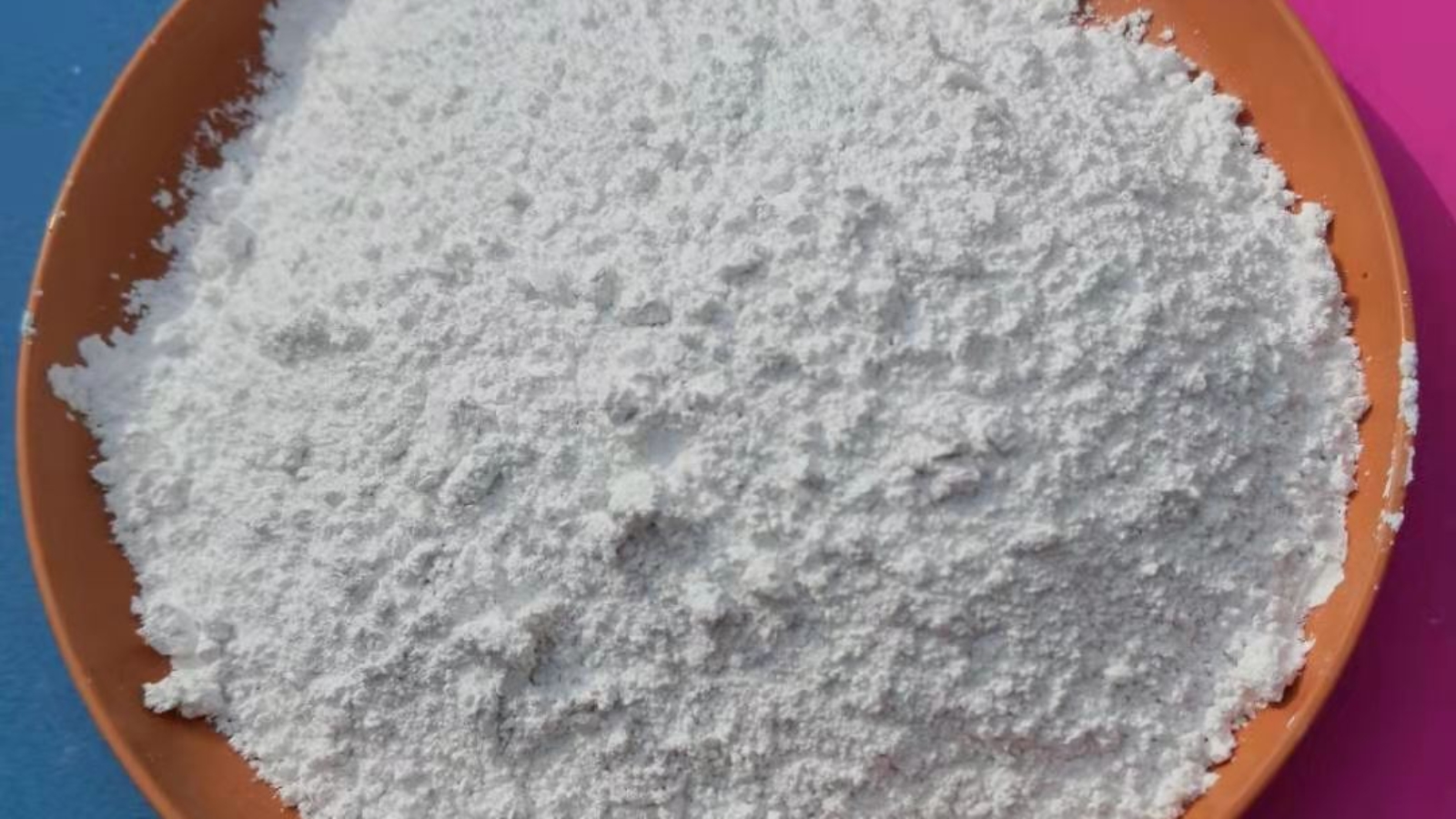
Low oil absorption active calcium carbonate is a surface-modified mineral filler widely used in coatings, plastics, rubber, adhesives, and sealants. Compared with ordinary calcium carbonate, it features lower oil absorption value, better dispersion, and stronger compatibility with polymer systems, making it a key material for high-performance and cost-optimized formulations.
As industries demand higher efficiency, better processing stability, and improved surface quality, low oil absorption active calcium carbonate has become an essential functional filler rather than just a cost reducer.
What Does “Low Oil Absorption” Mean in Calcium Carbonate?
Oil absorption refers to the amount of oil required to wet a given quantity of powder. In industrial formulations, this directly affects:
- Resin demand
- Viscosity control
- Processing stability
- Final product appearance
Low oil absorption active calcium carbonate typically has an oil absorption value 20–40% lower than untreated calcium carbonate. This is achieved through surface treatment, commonly with stearic acid or other coupling agents, which reduces particle surface energy and agglomeration.
Lower oil absorption means:
- Less resin consumption
- Lower formulation viscosity
- Easier dispersion
- Improved flow and leveling
How Is Active Calcium Carbonate Different from Regular Calcium Carbonate?
Active calcium carbonate is produced by modifying high-purity calcium carbonate particles through a controlled surface treatment process. This modification changes the powder from hydrophilic to organophilic, improving its interaction with organic polymers.
Key differences include:
| Property | Regular CaCO₃ | Active CaCO₃ |
|---|---|---|
| Surface | Hydrophilic | Organophilic |
| Oil absorption | High | Low |
| Dispersion | Average | Excellent |
| Compatibility | Limited | Strong |
| Processing efficiency | Moderate | High |
Because of these advantages, active calcium carbonate is preferred in high-speed extrusion, injection molding, and high-solid coatings.
Why Is Low Oil Absorption Important in Coatings?
In coating systems, oil absorption directly affects viscosity and formulation cost. Low oil absorption active calcium carbonate offers several benefits:
- Reduces resin usage, lowering overall cost
- Improves flow, leveling, and anti-settling performance
- Enhances surface smoothness and gloss retention
- Allows higher filler loading without thickening
It is particularly suitable for:
- Solvent-based coatings
- Industrial paints
- Wood coatings
- Protective and anticorrosion coatings
Lower viscosity also improves pumping, mixing, and application efficiency in large-scale production.
What Are the Benefits in Plastics and Masterbatch Applications?
In plastics and masterbatch, low oil absorption active calcium carbonate plays both a reinforcing and processing-enhancing role.
Main advantages include:
- Improved dispersion in PE, PP, PVC, and EVA systems
- Reduced melt viscosity and better flowability
- Enhanced stiffness without sacrificing impact resistance
- Improved surface finish of finished products
- Higher filler loading with stable mechanical properties
This makes it ideal for applications such as:
- Plastic films and sheets
- Injection-molded products
- PVC pipes and profiles
- Color and filler masterbatch
How Does It Perform in Rubber and Adhesives?
In rubber formulations, low oil absorption active calcium carbonate reduces compound viscosity and improves filler-polymer interaction. This results in:
- Better processing behavior
- More uniform filler distribution
- Improved tensile strength and dimensional stability
In adhesives and sealants, it helps control rheology, improve consistency, and enhance cost efficiency without compromising bonding performance.
How to Choose the Right Low Oil Absorption Active Calcium Carbonate?
When selecting a grade, consider the following factors:
- Particle size (D50 / D97)
- Oil absorption value
- Whiteness and purity
- Surface treatment type and coating ratio
- Target application system
Different industries require different balances between reinforcement, flowability, and cost optimization. Custom grades are often developed for specific formulations.
Conclusion
Low oil absorption active calcium carbonate is no longer just a filler—it is a functional material that directly influences processing efficiency, product performance, and formulation cost. By reducing resin demand, improving dispersion, and enhancing compatibility, it plays a critical role in modern coatings, plastics, rubber, and adhesive systems.
For manufacturers aiming to improve product quality while maintaining cost competitiveness, low oil absorption active calcium carbonate is a smart and proven solution.
Add a Comment