
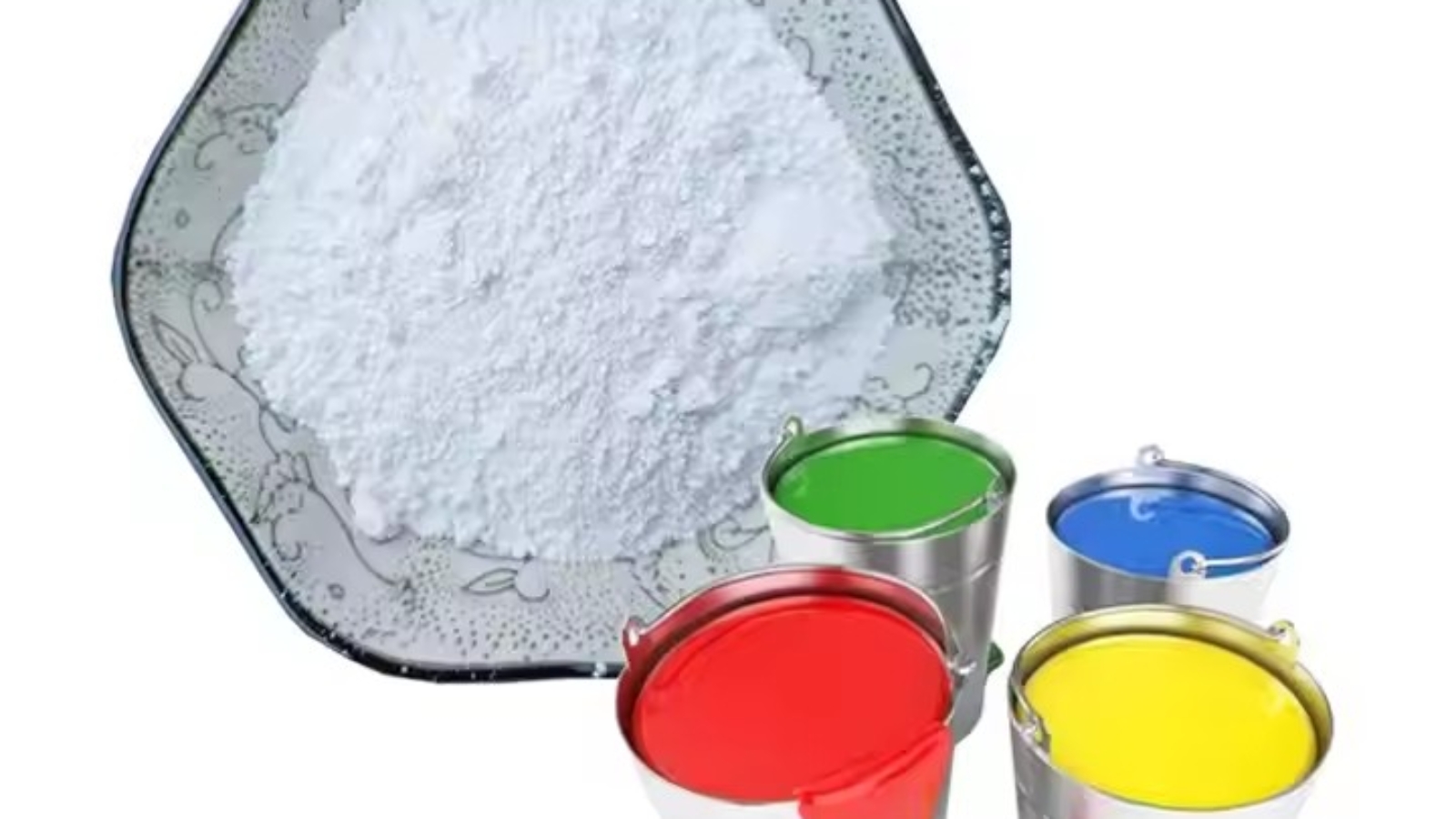
Calcium carbonate (CaCO₃) is one of the most widely used functional fillers in powder coating formulations. It plays a crucial role in improving processing performance, controlling cost, and optimizing the final coating properties. Due to its stable chemical nature, adjustable particle size, and good compatibility with resin systems, calcium carbonate is commonly applied in architectural, industrial, and general-purpose powder coatings.
Unlike liquid coatings, powder coatings rely heavily on solid raw material interactions. This makes filler selection especially important, and calcium carbonate stands out as a versatile and cost-effective solution.
Why Is Calcium Carbonate Used in Powder Coating Formulations?
One of the main reasons calcium carbonate is used in powder coatings is cost optimization. As a high-quality mineral filler, it can partially replace more expensive raw materials such as resins without significantly compromising coating performance.
In addition to cost reduction, calcium carbonate offers:
- Good thermal stability during extrusion and curing
- Easy dispersion in dry blending processes
- Consistent quality and supply availability
These advantages make it suitable for both standard and high-volume powder coating production.
How Does Calcium Carbonate Affect Powder Coating Flow and Processing?
Calcium carbonate significantly influences the processing behavior of powder coatings. Properly selected particle size grades help improve powder flowability during mixing, extrusion, and electrostatic spraying.
Fine and well-dispersed calcium carbonate can:
- Reduce melt viscosity during extrusion
- Improve powder fluidity and spray efficiency
- Minimize defects such as pinholes and poor leveling
This leads to more stable production, higher transfer efficiency, and reduced material waste during application.
Does Calcium Carbonate Improve the Mechanical Properties of Powder Coatings?
Yes, calcium carbonate contributes positively to the mechanical performance of powder coatings when used at appropriate loadings. It enhances hardness and stiffness while maintaining sufficient flexibility, especially in indoor and general industrial applications.
In many formulations, calcium carbonate helps:
- Increase surface hardness
- Improve abrasion resistance
- Enhance dimensional stability of the cured film
For applications where impact resistance is critical, calcium carbonate is often used in combination with other fillers or modifiers to achieve balanced performance.
How Does Calcium Carbonate Influence Surface Finish and Appearance?
Surface quality is a key concern in powder coatings, and calcium carbonate plays an important role here as well. High-purity, fine-particle calcium carbonate contributes to a smooth and uniform coating surface.
Its benefits include:
- Improved surface flatness
- Reduced orange peel effect
- Enhanced opacity and hiding power
When paired with titanium dioxide or other pigments, calcium carbonate helps optimize pigment distribution and overall visual appearance, especially in matte and semi-gloss coatings.
Is Calcium Carbonate Suitable for Different Types of Powder Coatings?
Calcium carbonate is compatible with a wide range of powder coating systems, including:
- Epoxy powder coatings
- Polyester powder coatings
- Epoxy-polyester hybrid systems
It is widely used in architectural aluminum coatings, metal furniture, appliances, pipes, and general metal protection applications. However, for high-weather-resistance or outdoor premium coatings, surface-treated or ultra-fine grades are often preferred to ensure long-term durability.
How to Choose the Right Calcium Carbonate for Powder Coatings?
Selecting the right calcium carbonate depends on particle size, purity, and surface characteristics. Key factors to consider include:
- Particle size distribution for smooth extrusion
- High whiteness for color consistency
- Low moisture content to avoid defects
- Optional surface treatment for better resin compatibility
Using the correct grade ensures consistent coating performance and stable production results.
Conclusion
Calcium carbonate is an essential functional filler in powder coatings, offering a balance of performance enhancement, processing efficiency, and cost control. From improving flow and mechanical strength to enhancing surface appearance, its role is both technical and economical. By selecting the appropriate grade, powder coating manufacturers can achieve reliable quality while maintaining competitive production costs.
Add a Comment