
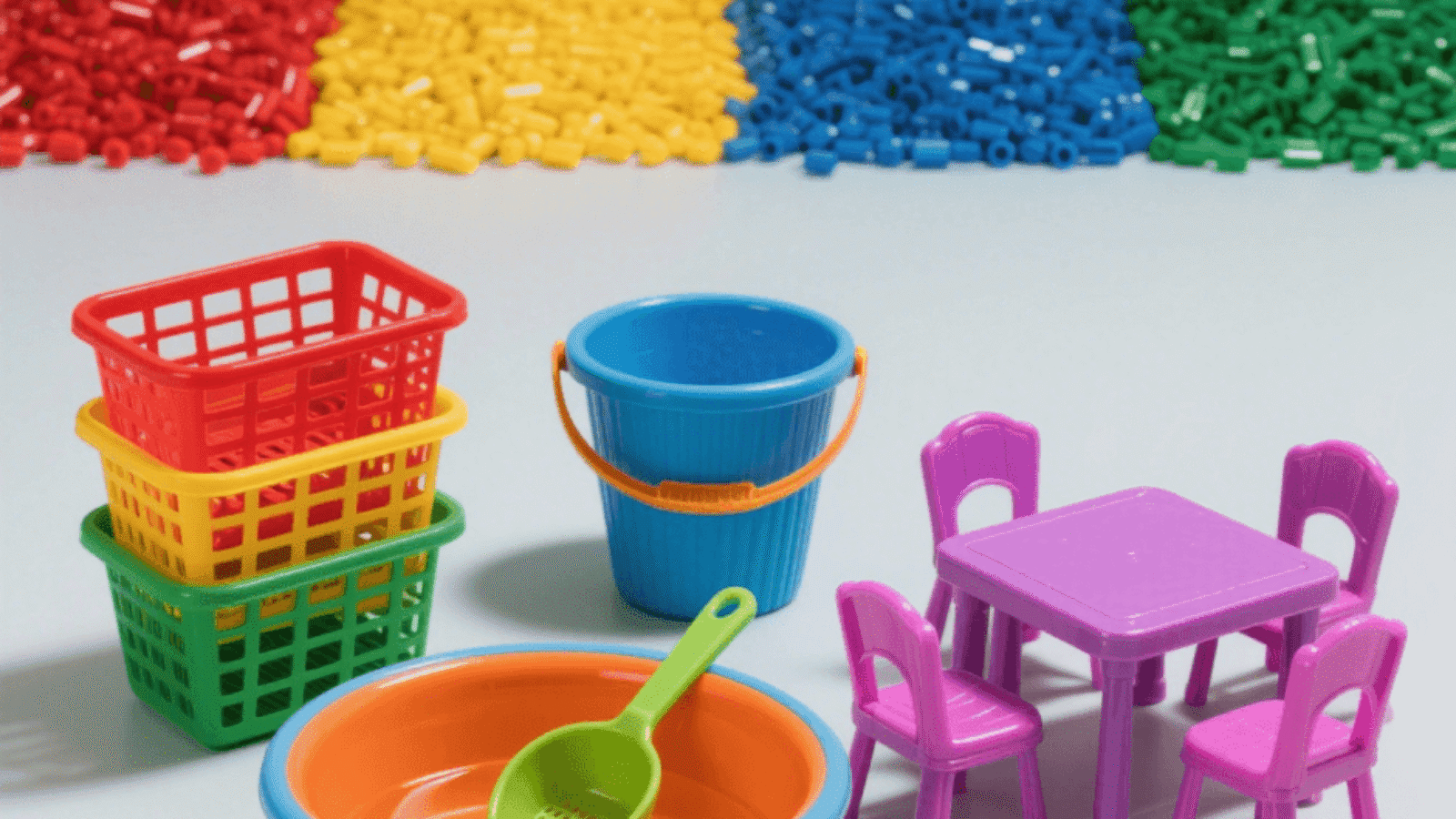
Calcium carbonate (CaCO₃) is one of the most widely used mineral fillers in the plastics industry. From packaging films and injection-molded parts to pipes, profiles, and household goods, calcium carbonate plays a crucial role in improving performance while reducing production costs. But what exactly does calcium carbonate do in plastic products, and why do manufacturers rely on it so heavily?
This article explains the functions, benefits, and application considerations of calcium carbonate filler in plastics, helping buyers and engineers better understand its value.
Why Is Calcium Carbonate Added to Plastics?
Calcium carbonate is added to plastics primarily as a functional filler. Unlike pigments or additives used in small amounts, CaCO₃ can be incorporated at high loading levels to enhance both economic and physical properties.
Key reasons for using calcium carbonate in plastics include:
- Cost reduction
- Improved stiffness and dimensional stability
- Better surface quality
- Enhanced processing efficiency
Because of its natural abundance, stable chemistry, and compatibility with most polymers, calcium carbonate remains a preferred filler across global plastic manufacturing.
How Does Calcium Carbonate Reduce Plastic Production Costs?
One of the most important roles of calcium carbonate is cost control. Pure polymers such as polyethylene (PE), polypropylene (PP), and PVC are significantly more expensive than mineral fillers.
By partially replacing resin with calcium carbonate:
- Raw material costs are reduced
- Price fluctuations of polymers are buffered
- More competitive end-product pricing becomes possible
This is especially valuable in high-volume plastic products such as packaging films, pipes, and disposable items.
How Does Calcium Carbonate Improve Mechanical Properties?
When properly selected and dispersed, calcium carbonate can enhance several mechanical characteristics of plastic products.
Increased stiffness and rigidity
Fine calcium carbonate particles increase the modulus of plastics, making products more rigid and dimensionally stable.
Improved impact resistance (with proper formulation)
In some applications, especially when using coated calcium carbonate, impact strength can be maintained or even improved.
Better dimensional stability
Calcium carbonate reduces shrinkage and warpage during cooling, which is critical for injection molding and extrusion processes.
What Is the Effect of Calcium Carbonate on Plastic Processing?
Calcium carbonate does not only affect final product performance—it also improves processing behavior.
Benefits during processing include:
- Better melt flow control
- Reduced die buildup in extrusion
- Faster cooling and shorter cycle times
- Improved extrusion output and shape retention
Surface-treated (coated) calcium carbonate, such as stearic-acid-coated grades, further enhances dispersion and compatibility with polymer matrices.
How Does Calcium Carbonate Affect Appearance and Surface Quality?
Calcium carbonate contributes positively to the visual quality of plastic products:
- Increases whiteness and brightness
- Improves opacity and hiding power
- Enhances surface smoothness
These properties are especially important in packaging, household plastics, and consumer goods where appearance influences purchasing decisions.
Which Plastic Products Commonly Use Calcium Carbonate Filler?
Calcium carbonate is widely used across different plastic processing methods, including extrusion, injection molding, and blow molding.
Typical applications include:
- PVC pipes, fittings, and profiles
- Plastic films and sheets
- Injection-molded household products
- Woven bags and packaging materials
- Cable insulation and conduits
Both ground calcium carbonate (GCC) and precipitated calcium carbonate (PCC) are used, depending on performance requirements and cost targets.
How to Choose the Right Calcium Carbonate for Plastics?
Selecting the correct calcium carbonate filler is essential for optimal performance. Key factors to consider include:
- Particle size and distribution
- Whiteness and purity
- Surface treatment (coated or uncoated)
- Oil absorption value
- Application-specific requirements
Fine, coated calcium carbonate is generally preferred for high-performance plastics, while coarser grades are suitable for cost-driven applications.
Conclusion
Calcium carbonate filler plays a vital role in plastic products by reducing costs, improving mechanical properties, enhancing processing efficiency, and upgrading appearance. With proper selection and formulation, it allows plastic manufacturers to balance performance and economy effectively.
As global demand for efficient, high-quality plastic materials continues to grow, calcium carbonate will remain an indispensable component in modern plastic compounding and production.
Add a Comment