
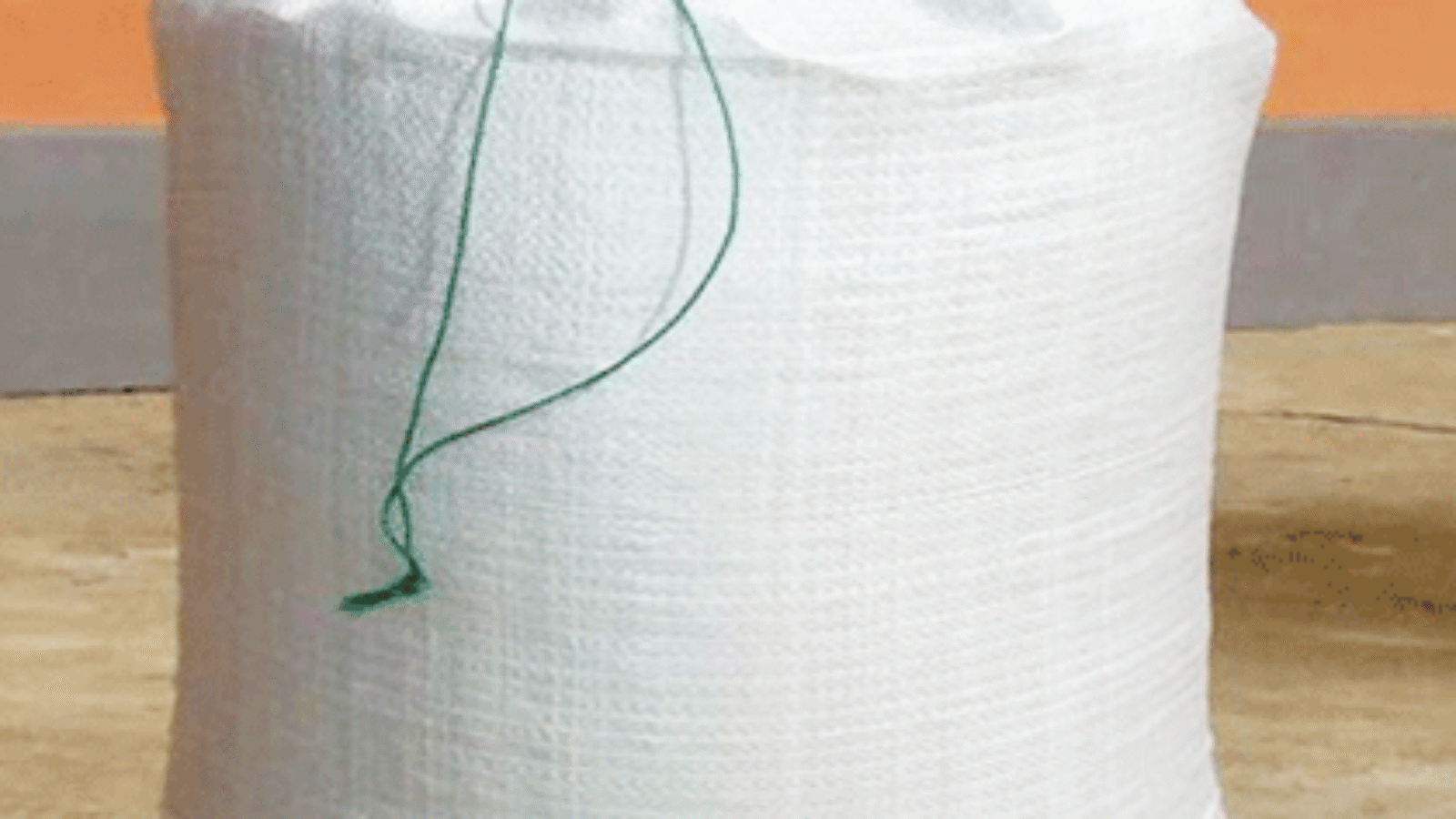
Calcium carbonate (CaCO₃) has become one of the most widely used functional fillers in the woven bag industry, especially for PP woven bags, raffia bags, rice bags, cement bags, and FIBC jumbo bags. As global demand for cost-effective and high-performance packaging materials continues to grow, manufacturers increasingly rely on calcium carbonate to improve product quality and reduce production expenses.
This article explains the key functions, advantages, and best practices of using calcium carbonate in woven bag manufacturing, based on real industry needs and international search behavior.
Why Calcium Carbonate Is Used in Woven Bags
In woven bag production, calcium carbonate masterbatch or powder is typically blended with polypropylene (PP) or polyethylene (PE) resin during extrusion. It serves as both a cost-saving filler and a performance-enhancing additive.
Here are the main reasons manufacturers use CaCO₃:
1. Cost Reduction
Calcium carbonate significantly lowers the cost of woven bag production because:
- It replaces a portion of expensive PP or PE resin
- It allows higher output due to improved processing efficiency
For many factories, CaCO₃ masterbatch can reduce raw material costs by 15–30% without compromising product strength.
2. Improved Extrusion and Processing
CaCO₃ enhances the extrusion performance of woven bag production lines:
- Better material flow
- Faster cooling
- More stable tape drawing
- Reduced machine load
This results in higher production speed and fewer tape-breaking issues.
3. Higher Fabric Stiffness and Better Bag Shape
Calcium carbonate increases the rigidity of PP tapes, helping woven bags:
- Maintain shape
- Resist deformation
- Improve stackability
This is important for cement bags, chemical bags, rice bags, and packaging that needs strong structural integrity.
4. Enhanced Printability
The presence of CaCO₃ creates a smoother surface for woven fabrics, improving:
- Ink adhesion
- Print clarity
- Color uniformity
This helps brand logos and product information stand out on the bag.
5. Better Heat Resistance
CaCO₃ improves thermal stability during the stretching process, reducing:
- Tape breakage
- Film shrinkage
- Production defects
This increases production consistency and reduces waste.
Applications of Calcium Carbonate in the Woven Bag Industry
Calcium carbonate is used in multiple types of woven packaging products:
1. PP/PE Woven Bags
Ideal for:
- Rice
- Wheat
- Sugar
- Animal feed
- Fertilizer
- Chemical powders
These bags benefit from improved cost efficiency and durability.
2. Cement Bags
Cement packaging requires high stiffness and better printing quality, both of which are improved with CaCO₃.
3. FIBC Jumbo Bags
For jumbo bags, CaCO₃ helps optimize:
- Tensile strength
- UV resistance (when combined with additives)
- Dimensional stability
4. Raffia Tape and Woven Fabric
Calcium carbonate helps produce smoother, more uniform tapes used in woven sack production.
5. Laminated Woven Bags
The smooth surface achieved with CaCO₃ greatly improves lamination quality.
Recommended Loading Levels
The typical usage amount varies depending on product and quality requirements:
| Application | Recommended CaCO₃ Loading |
|---|---|
| Regular PP woven bags | 5–20% |
| High-strength woven bags | 5–12% |
| Cement bags | 10–18% |
| Laminated woven bags | 10–25% |
| Jumbo bags (FIBC) | 3–8% |
These values may vary depending on masterbatch quality and resin grade.
Benefits for Manufacturers
Using calcium carbonate in woven bag production offers factories:
- Lower raw material cost
- More stable production
- Better end-product stiffness
- Improved printing effect
- Smooth tape surface and fewer defects
- Higher profit margin due to cost-performance ratio
This is why CaCO₃ is considered an essential material in modern woven packaging industries worldwide.
Conclusion
Calcium carbonate plays a vital role in the woven bag industry by combining cost efficiency with performance enhancement. Whether producing standard PP woven sacks, cement bags, or jumbo FIBC bags, CaCO₃ helps factories optimize production, improve product quality, and stay competitive in the global packaging market.
If you need high-quality calcium carbonate or CaCO₃ masterbatch for woven bags, feel free to let me know — I can help you draft marketing text, product descriptions, or customer messages as well.
Add a Comment