
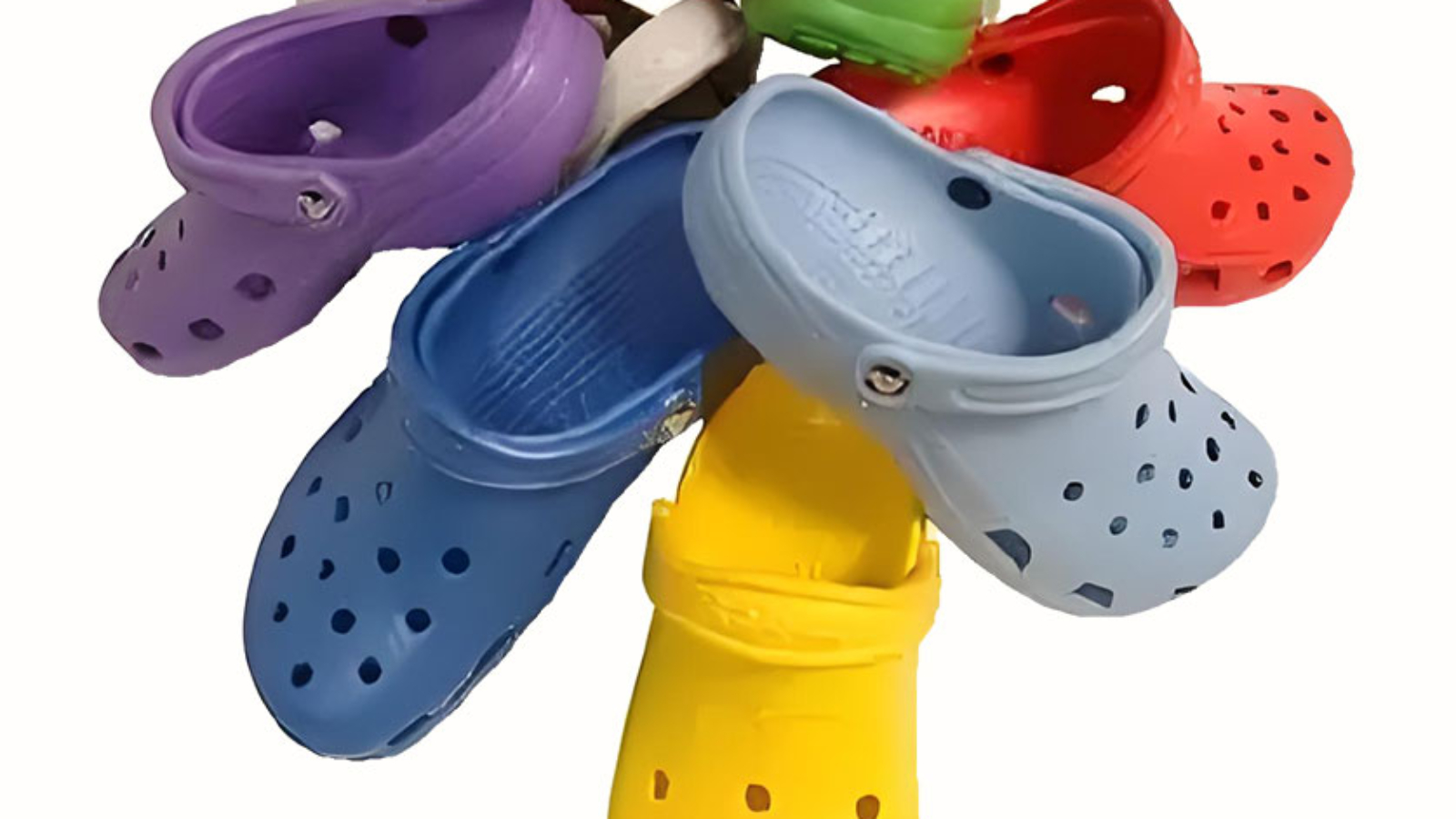
In the footwear industry, the choice of materials directly affects product comfort, durability, and production cost. While rubber, EVA, PVC, and polyurethane are the most common materials for soles and midsoles, fillers have become an essential ingredient in modern footwear manufacturing. These fillers—such as talc, calcium carbonate, kaolin, and silica—play a crucial role in optimizing both performance and economy.
1. What Are Fillers in Footwear Materials?
Fillers are fine mineral powders added to polymer materials during production. Their purpose is not just to reduce cost but to improve the mechanical, thermal, and surface properties of the final product. When properly dispersed, fillers help enhance hardness, wear resistance, flexibility, and even color consistency of footwear components.
Commonly used fillers include:
- Talc powder: Improves smoothness, heat resistance, and dimensional stability.
- Calcium carbonate (CaCO₃): Reduces cost and increases stiffness.
- Kaolin clay: Enhances surface finish and printability.
- Silica: Boosts abrasion resistance and tensile strength.
2. Applications in Footwear Components
(1) Outsoles and Midsoles
Rubber or EVA soles often contain calcium carbonate or talc to achieve the right balance between flexibility and hardness. These fillers also reduce shrinkage and improve the uniformity of foam structures in EVA soles, ensuring better comfort and stability.
(2) Insole Boards and Linings
Fillers help increase rigidity and dimensional stability, preventing deformation during wear. They also improve adhesion between layers in composite materials.
(3) Synthetic Leather and Uppers
In PU or PVC-based synthetic leather, fillers like talc and barium sulfate enhance texture, reduce stickiness, and give a more natural feel. They also improve coating uniformity and reduce material usage.
3. Advantages of Using Mineral Fillers
- 💰 Cost Reduction: Fillers partially replace expensive resins, reducing raw material costs by up to 20–40%.
- ⚙️ Improved Processability: Enhance extrusion and molding flow, reducing defects during production.
- 🩴 Enhanced Performance: Increase wear resistance, stiffness, and dimensional stability, essential for long-lasting soles.
- 🌿 Eco-Friendly Impact: Using mineral fillers reduces polymer consumption, lowering the carbon footprint of footwear production.
4. Choosing the Right Filler for Footwear
The ideal filler depends on the base polymer and target product features:
- Talc: Best for EVA and PU soles requiring smooth surface and heat resistance.
- Calcium Carbonate: Ideal for PVC and rubber soles where cost efficiency and hardness are key.
- Kaolin: Suitable for PU coatings and synthetic leather to improve tactile feel.
- Silica: Recommended for high-performance shoes requiring extra abrasion resistance.
Proper particle size control and surface treatment (e.g., stearic acid coating) are crucial to ensure uniform dispersion and optimal performance.
5. Future Trends
As the footwear industry shifts toward sustainability and lightweight design, fillers are evolving too. Modern research focuses on nano-fillers and bio-based minerals that deliver superior mechanical properties while maintaining eco-friendly profiles. These innovations help manufacturers balance cost, quality, and environmental responsibility.
Conclusion
Fillers are no longer just cost-cutting additives—they’re functional enhancers that define the quality and performance of modern footwear. From improving comfort and durability to supporting sustainable production, mineral fillers like talc and calcium carbonate continue to play an irreplaceable role in shaping the future of the global footwear industry.
Add a Comment