
Introduction
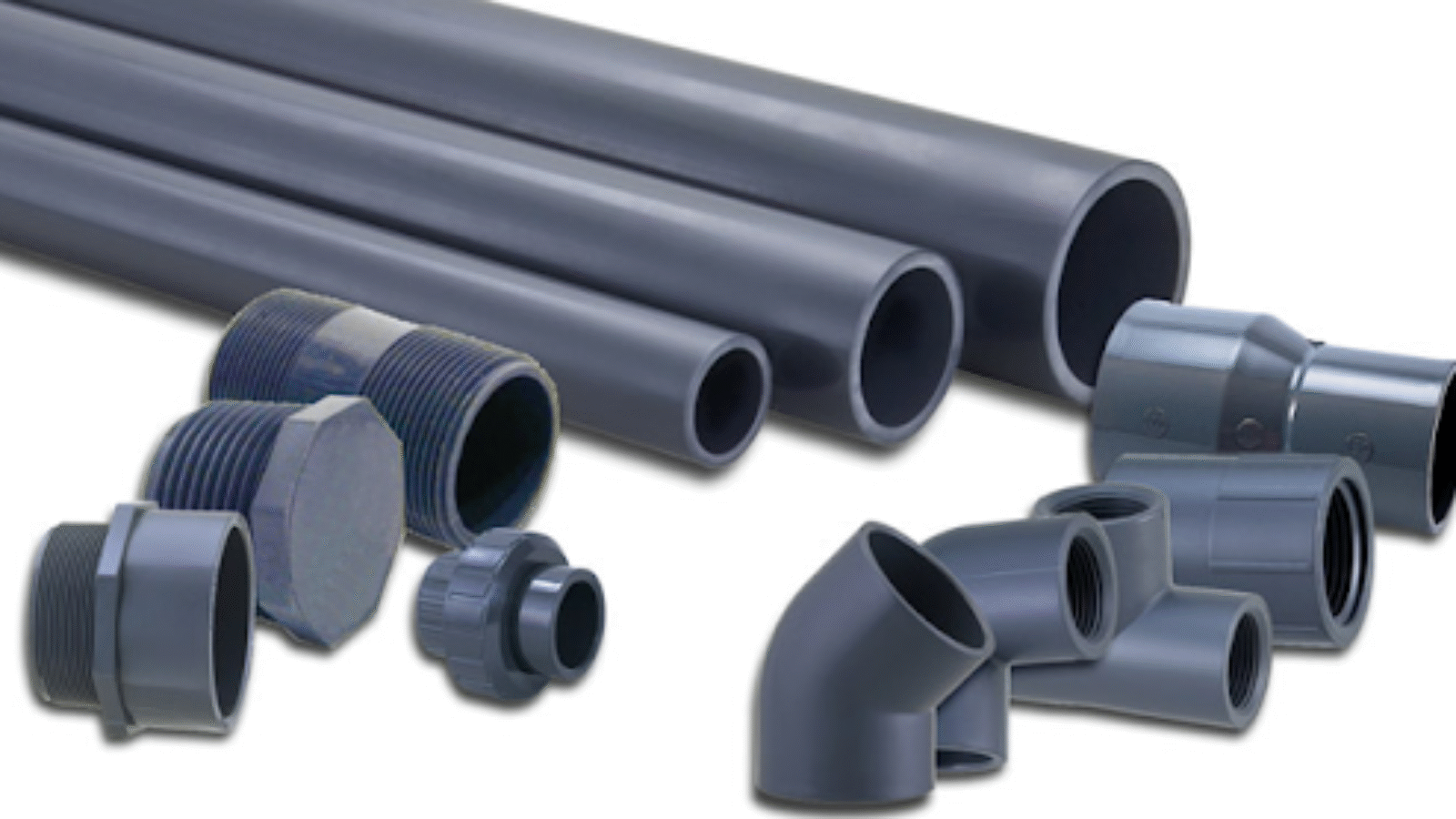
Calcium carbonate (CaCO₃) is one of the most essential and cost-effective fillers used in the PVC (polyvinyl chloride) pipe industry. From water supply pipes to electrical conduits and sewage systems, PVC pipes have become the backbone of modern infrastructure — and calcium carbonate plays a critical role in improving their performance, reducing costs, and ensuring long-term durability.
What Is Calcium Carbonate?
Calcium carbonate is a natural mineral derived from limestone and marble. It is processed into fine or ultrafine powders and used as a functional filler in PVC formulations. Thanks to its excellent compatibility, whiteness, and thermal stability, it is an ideal additive for rigid PVC (uPVC) pipe production.
Benefits of Using Calcium Carbonate in PVC Pipes
1. Cost Reduction
PVC resin is relatively expensive compared with fillers. By partially replacing resin with calcium carbonate, manufacturers can reduce material costs by 10–25% without compromising quality. This makes CaCO₃ one of the most economical and practical solutions in pipe extrusion.
2. Enhanced Mechanical Strength
Properly formulated PVC-CaCO₃ compounds show better stiffness, impact resistance, and dimensional stability. Calcium carbonate reinforces the PVC matrix, helping pipes maintain their shape under pressure and extending service life — especially important for pressure and drainage pipes.
3. Improved Heat Resistance and Stability
CaCO₃ acts as a heat stabilizer and reduces thermal deformation during the extrusion process. It allows smoother processing, improves thermal conductivity, and helps prevent pipe wall defects or surface burns during manufacturing.
4. Smooth Surface Finish
Fine calcium carbonate particles provide excellent dispersion and surface smoothness in PVC pipes. The result is a glossy, clean inner and outer surface, which reduces friction losses and improves water flow efficiency.
5. Dimensional Accuracy and Rigidity
Adding CaCO₃ improves pipe rigidity and dimensional control during cooling and sizing. This ensures consistent wall thickness and roundness, which are critical for meeting international pipe standards.
6. Environmental and Sustainability Benefits
Using calcium carbonate reduces overall PVC resin consumption, lowering the carbon footprint of pipe production. It also supports circular economy goals by making PVC compounds more resource-efficient.
Key Factors for Effective Use
To achieve optimal results, manufacturers must select the right type and grade of calcium carbonate:
- Particle Size: Fine and ultrafine grades (1–3 µm) are preferred for smooth surface and high mechanical strength.
- Coating Treatment: Stearic acid-coated CaCO₃ improves dispersion and compatibility with PVC resin.
- Loading Level: Typically, 5–25% CaCO₃ is used in rigid PVC formulations, depending on pipe type and performance requirements.
- Purity and Brightness: High-purity calcium carbonate ensures stable extrusion and excellent whiteness for visible pipe applications.
Common Applications of CaCO₃ in PVC Pipe Industry
- Water supply pipes (uPVC) – high rigidity and smooth surface
- Drainage and sewage pipes – improved impact strength and cost efficiency
- Electrical conduits – heat-resistant and dimensionally stable
- Irrigation and agricultural pipes – enhanced strength and long-term performance
Conclusion
Calcium carbonate has become an indispensable ingredient in PVC pipe manufacturing. It not only lowers production costs but also improves mechanical strength, thermal stability, and surface quality. By choosing high-quality and well-dispersed CaCO₃, pipe manufacturers can achieve consistent product quality, higher productivity, and greater competitiveness in both domestic and global markets.
As the PVC industry continues to grow, calcium carbonate remains a key additive driving innovation, sustainability, and performance across the entire piping value chain.
SEO Keywords:
Calcium carbonate in PVC pipes, CaCO₃ filler for PVC, PVC pipe manufacturing additive, PVC calcium carbonate masterbatch, PVC pipe filler, PVC compound formulation, PVC pipe strength improvement, PVC extrusion additive
Add a Comment