
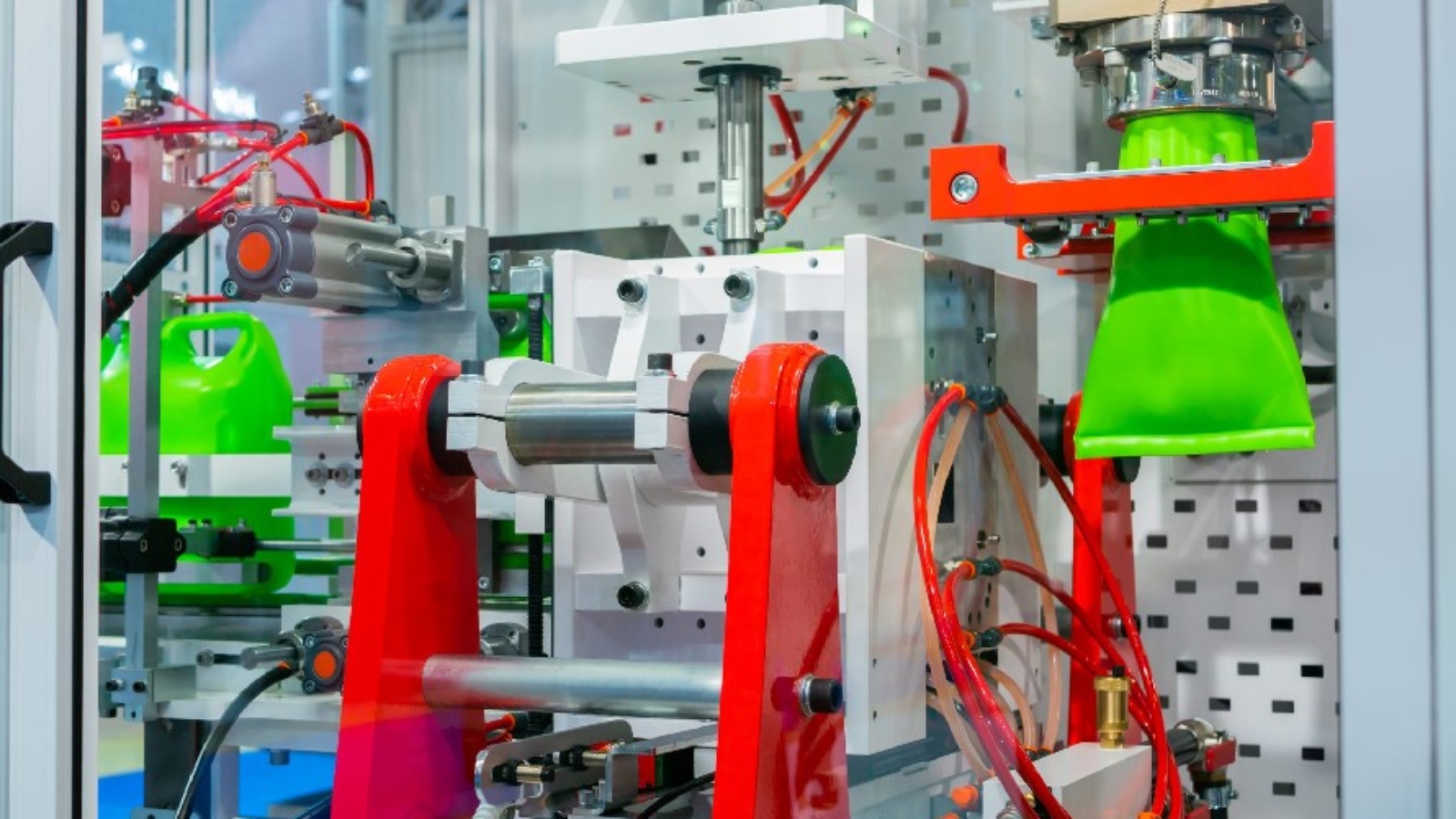
1. Blow Molding: A Quick Overview
Blow molding is a widely used plastic‐manufacturing process that enables the creation of hollow items from thermoplastic materials. In simple terms, molten plastic is introduced into a mold cavity and then inflated—by compressed air—so that it expands to fill the mold, taking its shape. During this expansion, the thickness of the wall is influenced by both the air pressure and volume of plastic used.
Though reminiscent of traditional glassblowing, blow molding is tailored for plastics and designed for efficient mass production. The technique dates back to the 1800s, but it wasn’t until the development of materials like low‐density and high‐density polyethylene (LDPE, HDPE) that blow molding truly became viable for widespread industrial use—especially in sectors such as beverage bottling and automotive fluid containers.
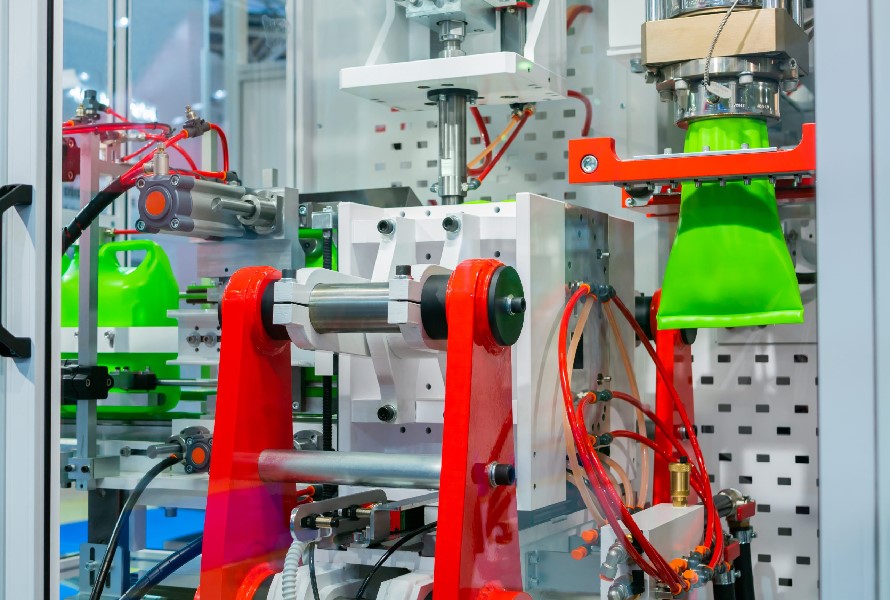
Two major variants of the process dominate industrial use: extrusion blow molding and injection blow molding. Both allow for rapid production, relatively low tooling costs, and intricate shapes—each with trade-offs in design flexibility and cycle time.
Common plastics used for blow molding include:
- Low‐density and high‐density polyethylene (LDPE, HDPE)
- Polypropylene (PP)
- Polyvinyl chloride (PVC)
- Acrylonitrile butadiene styrene (ABS)
- Polyethylene terephthalate (PET)
- Polyamide (Nylon)
- Thermoplastic elastomers (TPE)
- Ethylene vinyl acetate (EVA)
- Polystyrene (PS)
- Copolymers such as COP and COC
These materials are selected depending on requirements for strength, transparency, chemical resistance, flexibility, cost, and processing behavior.
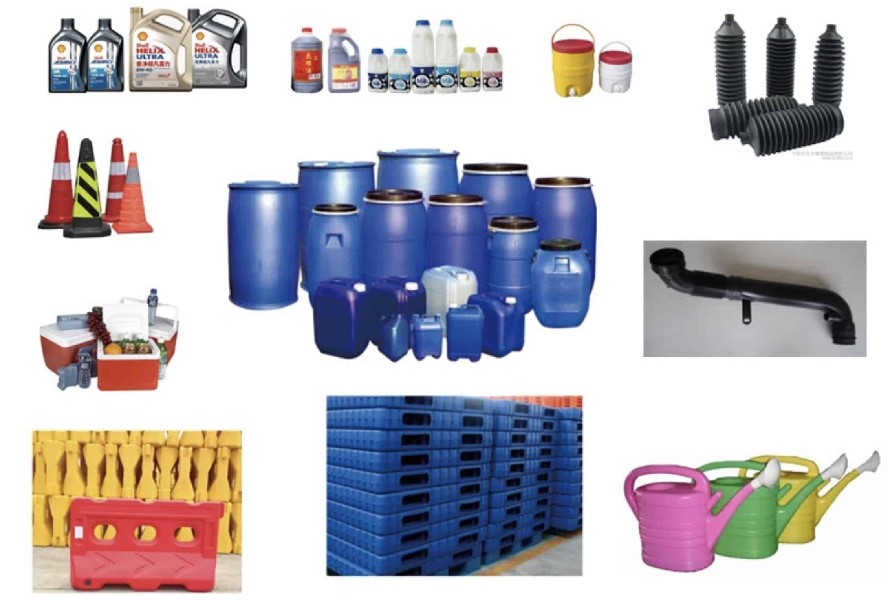
2. Which Products Are Made by Blow Molding?
Blow molding is used across numerous industries. Here are key examples of product categories:
- Automotive components: The automotive industry frequently uses blow molding for hollow parts that carry or contain fluids—such as fuel tanks, coolant overflow reservoirs, windshield washer fluid containers, and other under-hood parts. Its advantages: cost‐effective, repeatable, and robust enough for demanding environments.
- Household packaging: Everyday items such as detergent bottles, liquid soap dispensers, laundry jugs and similar containers are often produced by blow molding. Materials like HDPE, PP and PC are commonly used because they are durable, easy to process and cost‐effective.
- Medical, pharmaceutical & cosmetics containers: In these sectors you’ll find spray bottles, storage jars, wide‐mouth containers and other hollow plastic vessels. Blow molding accommodates custom shapes, sizes and textures—important for branding and functionality in cosmetics and healthcare packaging.
- Toys: Producers of children’s toys take advantage of blow molding when they need hollow, lightweight parts—balls, bats, sand toys, ride-ons and more. The technique allows for creative shapes and cost‐efficient production.
- Garden, lawn & outdoor products: Outdoor equipment, décor items, watering cans, plant containers, barrels for construction or landscaping often take advantage of blow‐molded plastic. The process lends itself to weather-resistant hollow shapes that are light yet structurally sound.
- Sports equipment: Some sports items—plastic bats, hollow training equipment, large hollow vessels—can be produced by blow molding thanks to its capacity to form seamless hollow bodies.
- Electronics enclosures: Cases or shells for devices sometimes use blow‐molded parts where a hollow form is beneficial—especially when requiring cost-efficient manufacture of protective housings.
- Marine equipment: Items designed to float or hold fluids underwater—such as buoys, tanks, floats, pontoons—often derive from blow molding. The hollow structure suits buoyancy, while the one-piece construction helps eliminate seams and leak paths.
- Industrial bulk containers and packaging: Large containers for transport and storage of liquids (water, oils, chemicals) can be produced through blow molding. Also, custom packaging with complex shapes for consumer or industrial goods benefits from the flexibility of blow molding.
3. Why Choose Blow Molding?
The reasons for using blow molding are compelling:
- High customisation: Blow molding supports complex geometries, varying wall‐thicknesses and special features (handles, necks, spouts) in one process.
- Production efficiency: It’s well suited to high‐volume manufacturing, enabling large output in relatively short cycle times.
- Cost-effectiveness: Tooling costs are relatively modest compared to other processes for similar hollow parts. Also, less material waste is generated when carefully designed.
- Versatile material use: A broad range of thermoplastic materials are compatible, giving design engineers flexibility in performance vs cost trade-offs.
4. Final Thoughts
From automotive fluid reservoirs to everyday household containers, from rugged garden parts to sleek cosmetic packaging—blow molding serves as a workhorse process for hollow plastic products across countless industries. Its combination of versatility, speed and efficiency makes it a go-to manufacturing route when a hollow, durable plastic part is required.
If you’re exploring production methods for a hollow plastic component, evaluating blow molding is a smart move—especially if you need a high‐volume solution with design flexibility and competitive cost.
Add a Comment