
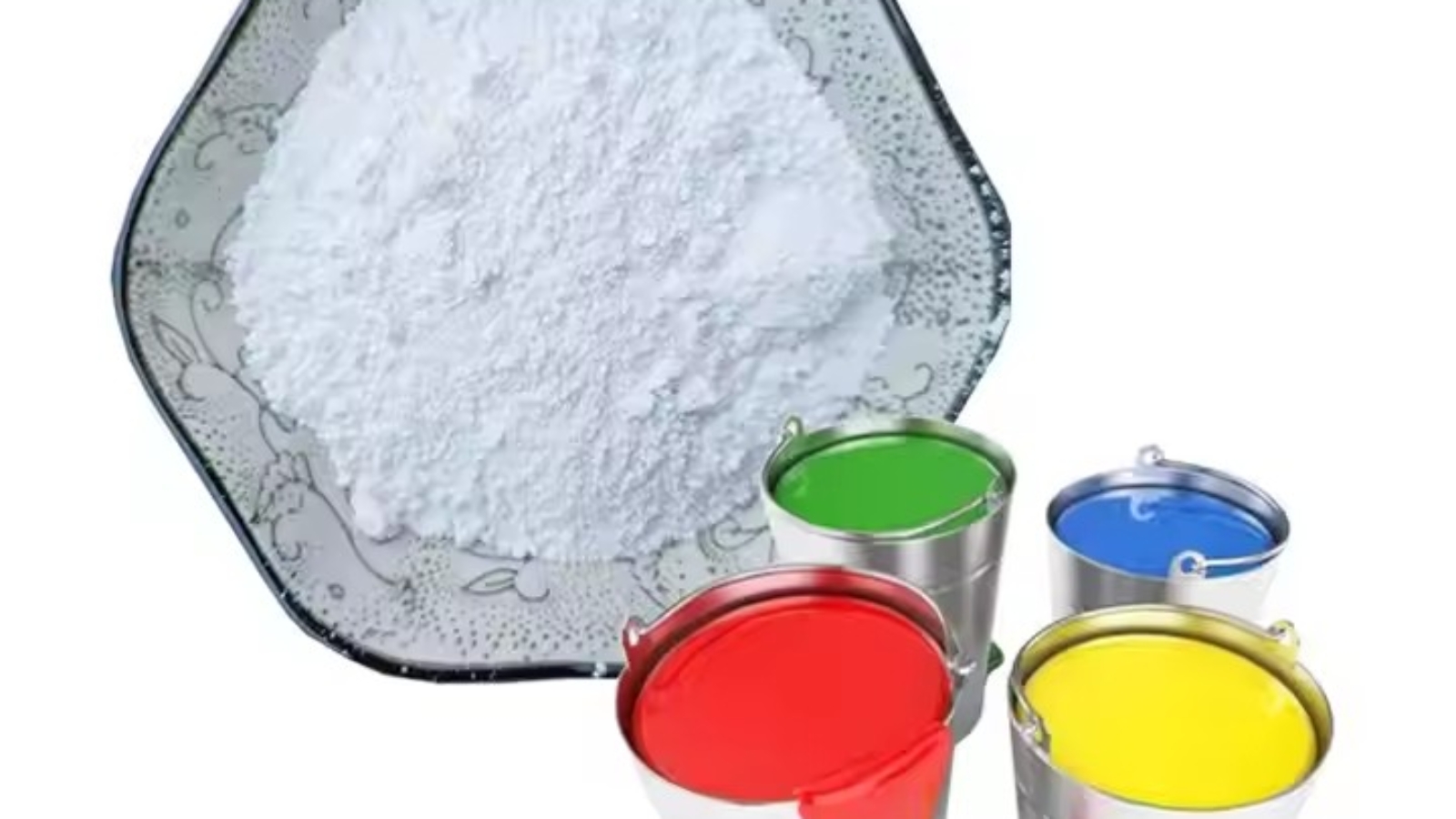
Barium sulfate (BaSO₄) is one of the most commonly used mineral fillers in the coatings industry. Known for its high density, chemical stability, and excellent whiteness, it plays an essential role in improving both the appearance and functional properties of paints and coatings. This article explores why barium sulfate is added to coatings, how it benefits the formulation, and what makes it an indispensable ingredient for modern paint manufacturers.
1. Improving Coating Durability and Weather Resistance
One of the key reasons for using barium sulfate in coatings is its outstanding chemical inertness and resistance to acids, alkalis, and corrosion. When added to paint formulations, BaSO₄ acts as a protective barrier, preventing environmental factors such as UV radiation, humidity, and pollutants from damaging the surface. This property makes it especially valuable for exterior architectural coatings, marine paints, and industrial protective coatings that must endure harsh outdoor conditions.
2. Enhancing Color and Gloss
Barium sulfate has a very high refractive index (around 1.64), which helps improve the brightness, opacity, and color saturation of coatings. It provides a strong base for pigments like titanium dioxide, allowing for better dispersion and more uniform color distribution. By using BaSO₄ as an extender, paint manufacturers can achieve excellent gloss and smoothness without compromising whiteness or optical clarity. This makes it ideal for high-end decorative coatings and automotive finishes.
3. Cost-Effective Pigment Extender
In modern coating formulations, cost optimization is always a concern. Barium sulfate serves as an economical extender pigment that can partially replace more expensive materials like titanium dioxide (TiO₂) while maintaining similar optical performance. Because BaSO₄ particles have good compatibility with resins and other pigments, it allows manufacturers to reduce TiO₂ consumption without sacrificing opacity or coverage power. This balance between performance and cost makes it highly attractive in both industrial and decorative paints.
4. Improving Mechanical and Surface Properties
The fine and uniform particle size of precipitated barium sulfate helps improve the physical structure of the coating film. It enhances hardness, abrasion resistance, and impact strength, ensuring a longer service life for the painted surface. Moreover, BaSO₄ improves surface smoothness and reduces gloss loss over time. In powder coatings, it also contributes to better flowability and film uniformity during the curing process.
5. Chemical and Thermal Stability
Unlike many organic fillers, barium sulfate remains stable under high temperatures and does not react with resins, solvents, or other components in the coating formulation. This stability ensures that the coating maintains consistent performance during production, storage, and application. For heat-resistant or chemical-resistant coatings, this property is particularly valuable.
Conclusion
Barium sulfate is much more than a filler—it’s a multifunctional performance enhancer that contributes to the durability, appearance, and cost efficiency of modern coatings. Whether in architectural paints, automotive finishes, or industrial protective coatings, BaSO₄ helps achieve a balance between quality and affordability. For coating manufacturers aiming to improve both performance and visual appeal, barium sulfate remains one of the most reliable and effective additives available today.
SEO Keywords: barium sulfate in coatings, BaSO₄ filler, paint additives, barium sulfate powder, coating extender pigment, industrial coatings, barium sulfate uses.
Add a Comment