
1. Introduction
Calcium carbonate (CaCO₃) is one of the most widely used mineral fillers in modern industries such as plastics, coatings, rubber, paper, and construction materials.
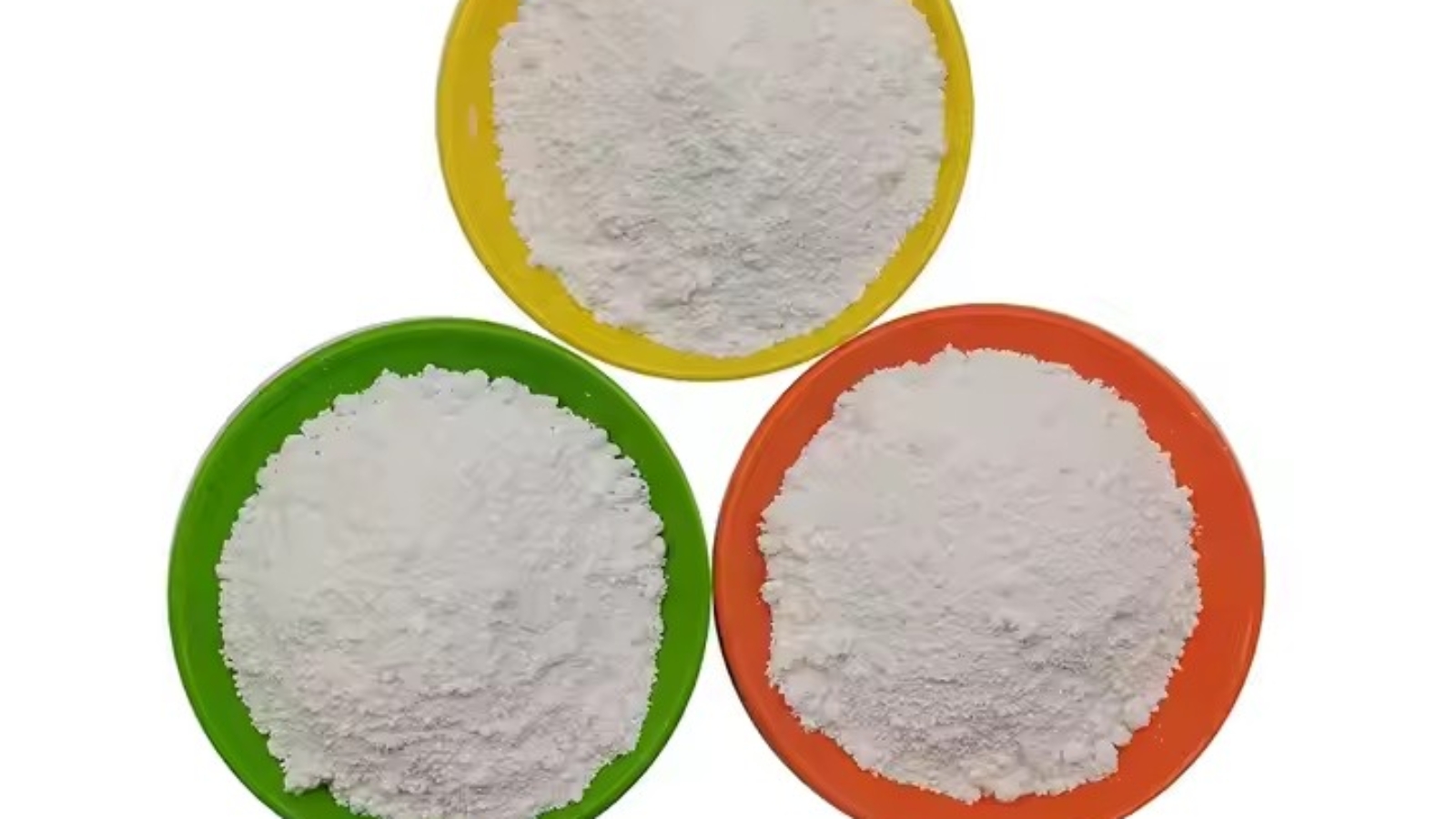
However, not all calcium carbonate products are the same. Depending on the production process and surface treatment, calcium carbonate can be classified into light calcium carbonate, heavy calcium carbonate, and activated calcium carbonate.
Understanding the difference between them helps manufacturers choose the right material for specific applications.
2. What Is Light Calcium Carbonate (Precipitated Calcium Carbonate, PCC)?
Light calcium carbonate, also known as precipitated calcium carbonate (PCC), is a synthetic product made through chemical precipitation. Typically, it is produced by reacting calcium hydroxide with carbon dioxide gas under controlled conditions.
Key features:
- Particle size: very fine and uniform (0.05–0.1 μm)
- Whiteness: high, with smooth surface
- Purity: excellent, due to controlled manufacturing
- Structure: porous and fluffy, low bulk density
Applications:
Light calcium is widely used in high-end coatings, paper, plastics, and rubber to improve brightness, opacity, and smoothness. It offers good dispersibility and optical performance but is more expensive due to its processing cost.
3. What Is Heavy Calcium Carbonate (Ground Calcium Carbonate, GCC)?
Heavy calcium carbonate, also called ground calcium carbonate (GCC), is obtained by mechanically crushing and grinding natural limestone, marble, or calcite ores.
Unlike light calcium, it is a physical product, not chemically synthesized.
Key features:
- Particle size: larger and irregular (1–10 μm)
- Whiteness: slightly lower than PCC
- Density: higher bulk density, heavier particle weight
- Cost: lower production cost
Applications:
Heavy calcium carbonate is mainly used as a general-purpose filler in plastics, rubber, cable, paint, and construction materials. It improves hardness, reduces shrinkage, and lowers production cost.
In plastics such as PP and PVC, GCC helps improve rigidity and dimensional stability.
4. What Is Activated Calcium Carbonate?
Activated calcium carbonate is a surface-treated version of calcium carbonate (either light or heavy) that has been modified with coupling agents or fatty acids such as stearic acid.
Key features:
- Surface: coated with organic molecules to reduce polarity
- Compatibility: greatly improved with polymers and organic resins
- Dispersion: excellent, prevents agglomeration during mixing
- Processing: easier to blend and extrude
Applications:
Activated calcium carbonate is commonly used in plastic masterbatch, rubber compounding, coatings, and adhesives. It enhances mechanical strength, smoothness, and product stability while improving process efficiency.
5. Comparison Summary
| Property | Light Calcium (PCC) | Heavy Calcium (GCC) | Activated Calcium |
|---|---|---|---|
| Production Method | Chemical precipitation | Mechanical grinding | Surface modification |
| Particle Size | Very fine and uniform | Larger and irregular | Similar to PCC/GCC but coated |
| Density | Low | High | Moderate |
| Surface Polarity | Hydrophilic | Hydrophilic | Hydrophobic (treated) |
| Dispersion | Excellent | Moderate | Excellent |
| Compatibility with Polymers | Poor | Poor | Excellent |
| Typical Applications | Coatings, paper, fine plastics | General plastics, rubber, construction | High-performance plastics, rubber, paints |
6. How to Choose the Right Type
- Choose light calcium carbonate (PCC) when high whiteness, purity, and fine particle size are required — such as in high-end paints or printing paper.
- Choose heavy calcium carbonate (GCC) for cost-effective bulk applications — like fillers for construction materials or standard plastics.
- Choose activated calcium carbonate when you need strong polymer compatibility, smooth processing, and enhanced mechanical performance — ideal for PP, PE, PVC, and rubber compounds.
7. Conclusion
Light calcium, heavy calcium, and activated calcium carbonate all share the same chemical composition but differ significantly in production process, particle structure, and surface characteristics.
Light calcium offers superior optical performance, heavy calcium provides cost-effective bulk strength, and activated calcium delivers excellent compatibility with polymers.
Selecting the right grade ensures better performance, lower cost, and improved product quality in modern industrial applications.
Add a Comment