
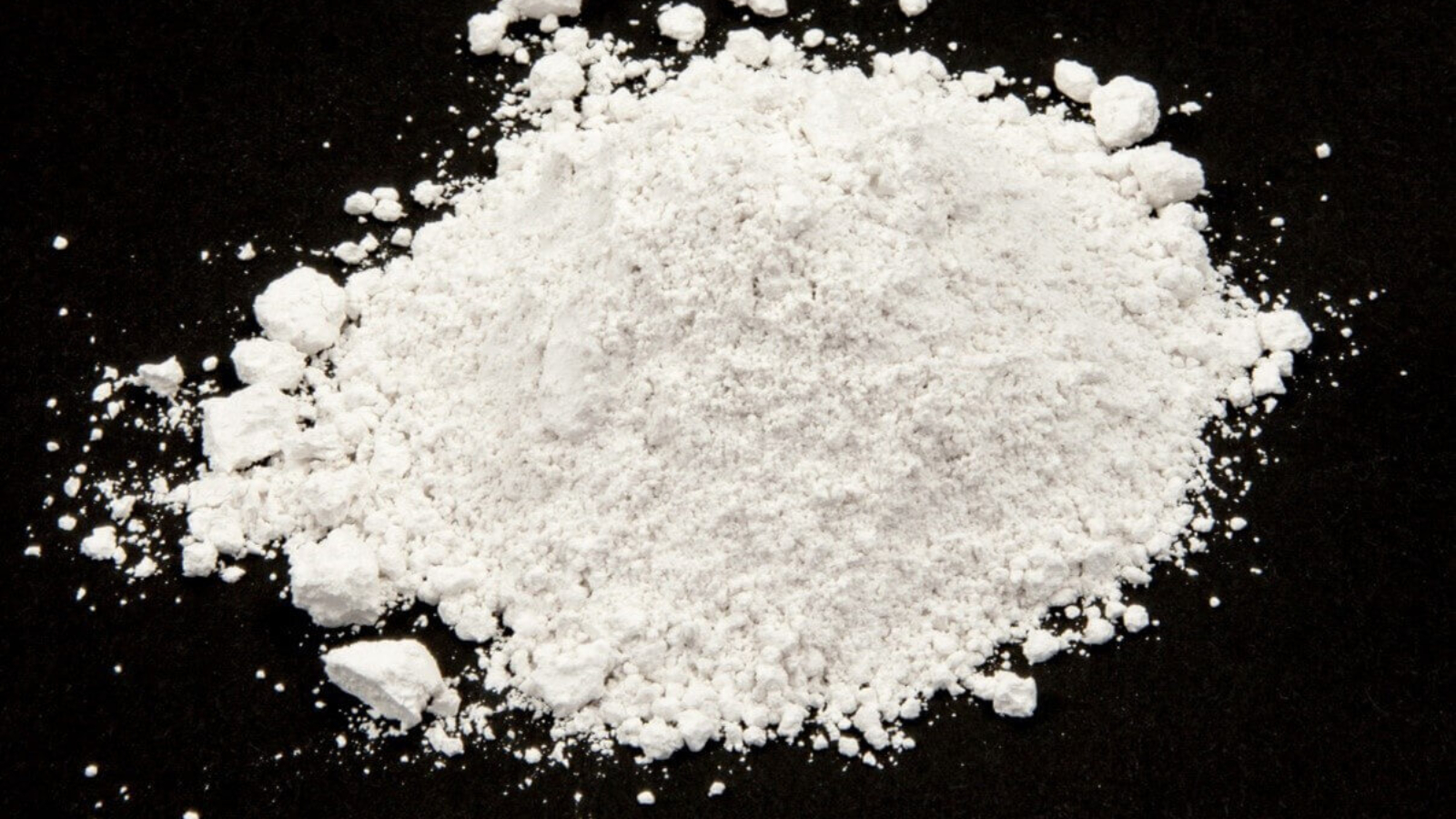
In the world of industrial minerals, titanium dioxide (TiO₂) and calcium carbonate (CaCO₃) are two of the most widely used white powders. Both improve the appearance, performance, and durability of products in industries like paints, plastics, coatings, paper, and cosmetics. Yet, despite their similar appearance, they serve very different purposes. Understanding their differences helps manufacturers choose the right material for performance, cost, and end-use requirements.
1. Different Origins and Chemical Nature
Titanium dioxide is a refined oxide mineral derived mainly from ilmenite and rutile ores. It’s valued for its extremely high whiteness and opacity, thanks to its strong light-scattering ability. TiO₂ is a pure compound of titanium and oxygen, giving it remarkable chemical stability and UV resistance.
Calcium carbonate, on the other hand, is a natural mineral found in limestone, marble, and chalk. It’s composed of calcium, carbon, and oxygen. Unlike TiO₂, which is mainly a pigment, CaCO₃ functions as a filler — used to improve bulk, surface finish, and mechanical strength at a much lower cost.
2. Appearance and Optical Properties
Both materials are white, but their whiteness and covering power are very different.
- Titanium dioxide has a very high refractive index (~2.7), meaning it bends and reflects light more effectively. This makes it the most powerful white pigment in existence.
- Calcium carbonate, with a much lower refractive index (~1.6), provides whiteness but cannot hide surfaces like TiO₂. It is often used as a supplementary extender rather than a main pigment.
In simple terms: if you want brilliant opacity and brightness, choose TiO₂; if you want volume and cost-efficiency, choose CaCO₃.
3. Key Physical and Functional Differences
| Property | Titanium Dioxide | Calcium Carbonate |
|---|---|---|
| Chemical Formula | TiO₂ | CaCO₃ |
| Refractive Index | ~2.7 | ~1.6 |
| Function | Pigment | Filler |
| Brightness | Extremely high | Moderate |
| UV Resistance | Excellent | Low |
| Cost | High | Low |
| Hardness (Mohs) | 5.5–6 | 3 |
| Density | 4.2 g/cm³ | 2.7 g/cm³ |
TiO₂ is used when appearance, brightness, and durability are critical. CaCO₃ is used to reduce costs and improve physical properties like stiffness, smoothness, or gloss.
4. Industrial Applications
Titanium Dioxide Applications
- Paints and Coatings: Provides exceptional whiteness, gloss, and hiding power.
- Plastics: Adds opacity and UV protection to prevent color fading.
- Paper: Used in high-end coated papers for brightness and print quality.
- Cosmetics: Acts as a whitening and UV-blocking agent in sunscreen and makeup.
- Ceramics & Textiles: Provides whiteness and resistance to heat and light.
Calcium Carbonate Applications
- Plastics: Increases stiffness, improves heat resistance, and lowers production costs.
- Paints and Coatings: Used as a filler to improve texture and reduce TiO₂ consumption.
- Paper: Enhances brightness, opacity, and print smoothness.
- Rubber and Cables: Improves mechanical strength and processing stability.
- Adhesives and Sealants: Provides volume and strengthens the matrix.
5. Cost and Performance Balance
One of the biggest differences lies in price. Titanium dioxide is among the most expensive white pigments because of its complex refining process. Calcium carbonate, however, is abundant and low-cost, making it ideal for balancing material expenses.
In many paint or plastic formulations, manufacturers combine TiO₂ and CaCO₃ — using titanium dioxide to achieve brightness and opacity, while calcium carbonate reduces cost and improves body or flow. This balance ensures optimal performance at a competitive price.
6. Environmental and Safety Aspects
Both materials are chemically stable and non-toxic, but their environmental footprints differ.
- TiO₂ production involves more energy-intensive processing and generates acidic byproducts.
- CaCO₃ production mainly involves mechanical grinding, making it a greener option with lower CO₂ emissions.
Therefore, in eco-friendly or cost-sensitive products, calcium carbonate is often preferred as a sustainable filler.
7. How to Choose Between Them
Your choice depends on the desired outcome:
- Choose titanium dioxide when your goal is maximum whiteness, opacity, and weather resistance.
- Choose calcium carbonate when you need bulk, cost reduction, or mechanical improvement.
- Use both together for the best balance between performance and affordability.
Conclusion
Titanium dioxide and calcium carbonate may look similar as fine white powders, but their roles, properties, and costs are very different. TiO₂ is the premium pigment, famous for its brightness and UV resistance, while CaCO₃ is the versatile filler, valued for its affordability and physical enhancement.
In modern industries, the smartest formulations often use both minerals strategically — titanium dioxide for color performance, and calcium carbonate for cost and functionality — achieving the perfect harmony between quality and efficiency.
Add a Comment