
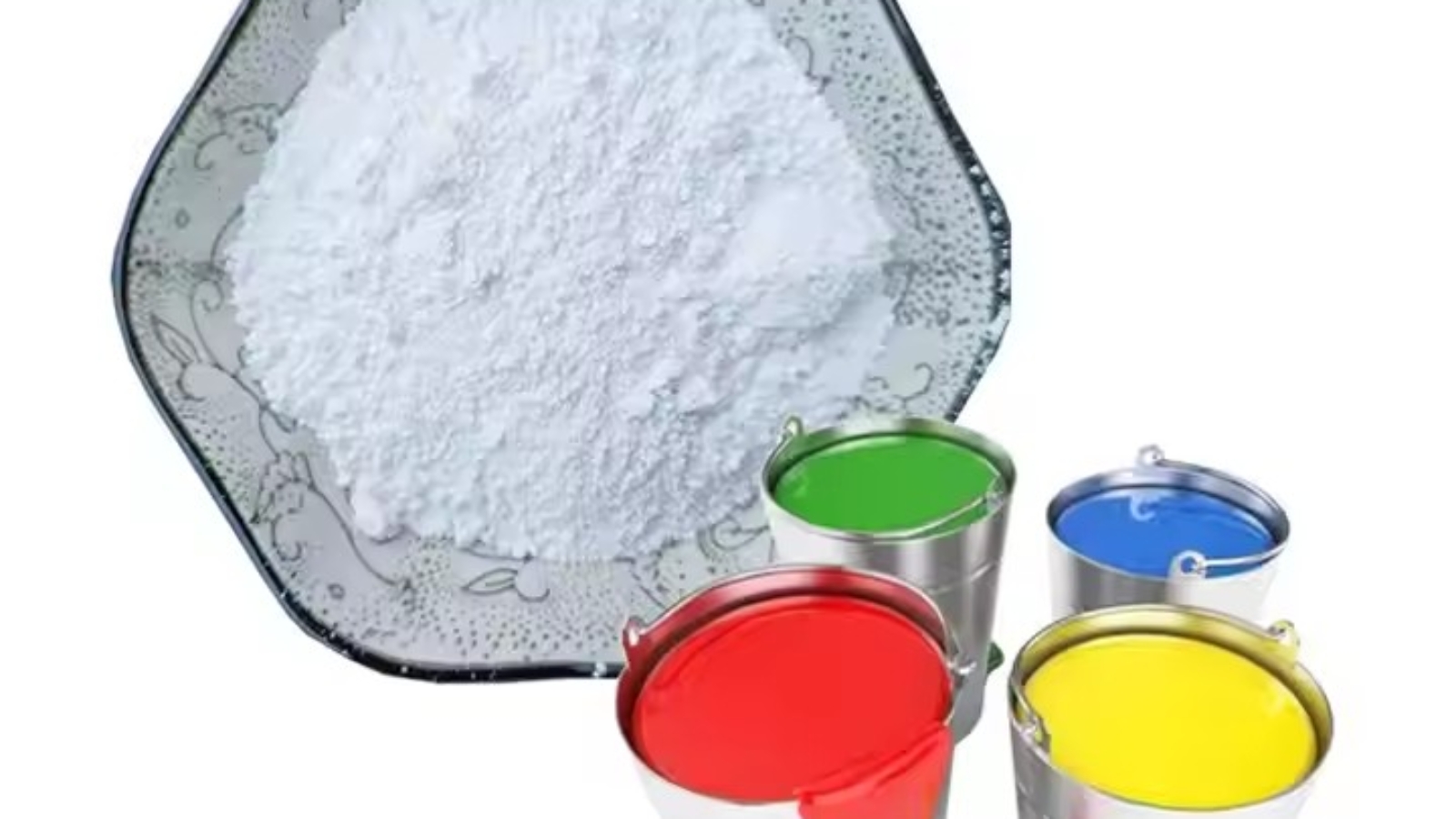
Fillers play a critical role in the coatings and paint industry, influencing properties such as opacity, smoothness, durability, and cost-efficiency. Among the most commonly used inorganic fillers are calcium carbonate (CaCO₃) and talc, each offering unique advantages. Choosing the right filler can significantly impact the performance, appearance, and economic feasibility of coatings. But which one is better for your formulation? Let’s dive in.
Understanding the Fillers
Calcium Carbonate
Calcium carbonate is a widely available mineral used extensively as a filler in paints and coatings. It comes in various grades, including ground, precipitated, and surface-treated types. Key advantages include:
- Cost-Effectiveness: CaCO₃ is economical, making it ideal for large-scale paint production.
- Opacity and Whiteness: Enhances hiding power and brightness of coatings, especially in decorative paints.
- Rheology Control: Improves viscosity, flow, and leveling properties during application.
- Surface Modification: Coated or modified grades ensure better compatibility with binders, preventing settling or clumping.
Talc
Talc is a platy silicate mineral known for its lamellar structure, which offers distinct benefits in coatings:
- Smoothness and Gloss: Talc improves surface finish, resulting in smooth, high-quality coatings.
- Durability and Flexibility: Enhances resistance to cracking, chalking, and mechanical stress.
- Matting Effect: Can reduce gloss in matte or satin coatings.
- High Thermal Stability: Useful in heat-resistant paints and industrial coatings.
Comparative Analysis: Calcium Carbonate vs Talc in Coatings
| Feature | Calcium Carbonate | Talc |
|---|---|---|
| Cost | Low, cost-effective for high-volume paints | Higher, but effective at low loading |
| Opacity/Whiteness | High, improves hiding power | Moderate, mainly affects surface texture |
| Surface Finish | Smooth with fine grades | Very smooth, improves gloss and slip |
| Durability | Moderate, supports mechanical strength | High, reduces cracking and improves flexibility |
| Rheology Control | Excellent, easy to disperse | Moderate, requires careful dispersion |
| Optimal Loading | 10–40% | 5–20% |
| Matting/Gloss Control | Limited | Excellent, especially for matte coatings |
Application Considerations
- Decorative Paints: Calcium carbonate is often preferred for interior and exterior paints where opacity, whiteness, and cost efficiency are priorities.
- Industrial and Specialty Coatings: Talc is chosen for applications requiring smoothness, durability, heat resistance, and reduced gloss, such as automotive, appliance, or high-performance industrial coatings.
- Hybrid Formulations: Many modern coatings combine CaCO₃ and talc to balance cost, opacity, surface finish, and durability.
Conclusion
Selecting the right filler for paints and coatings depends on the specific performance requirements. Calcium carbonate offers high opacity, excellent rheology, and cost advantages, making it ideal for decorative and bulk coatings. Talc, on the other hand, provides superior smoothness, mechanical durability, and gloss control, which are essential for specialty and industrial coatings.
By understanding the properties and optimal applications of each filler, formulators can design coatings that meet both performance and budget requirements. The strategic use of fillers like calcium carbonate and talc ensures coatings not only look better but also last longer.
Add a Comment