
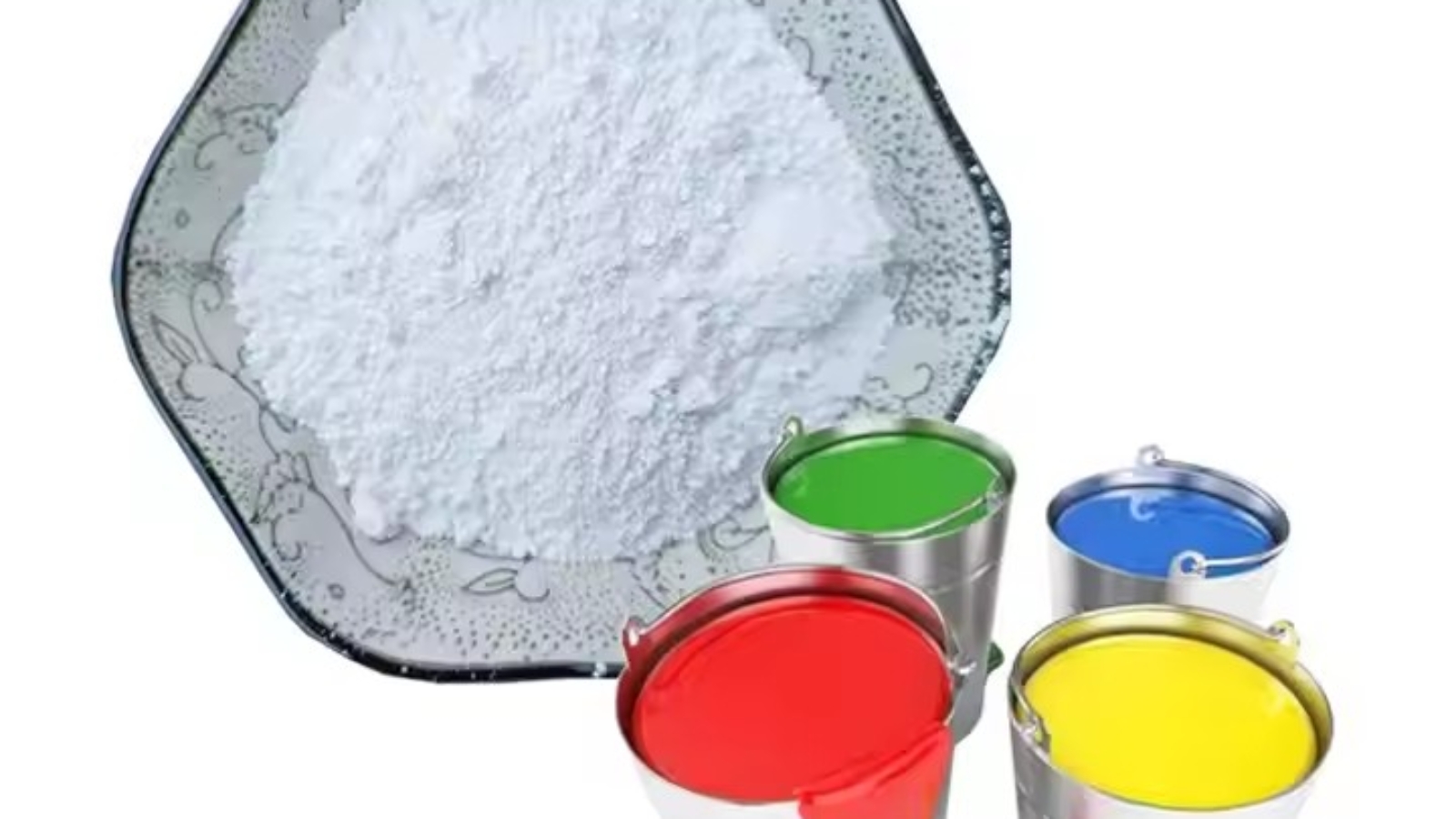
Calcium carbonate (CaCO₃) is a key mineral additive in the paints and coatings industry, widely valued for its cost-effectiveness, versatility, and performance-enhancing properties. From decorative paints to industrial coatings, calcium carbonate improves both the functional and aesthetic qualities of coatings, making it an essential ingredient for manufacturers worldwide.
1. Cost Efficiency Without Compromising Quality
Incorporating calcium carbonate into paints and coatings helps manufacturers reduce production costs by partially replacing more expensive raw materials. Its abundance and affordability make it an ideal filler, while maintaining high-quality performance standards. This allows paint producers to offer competitive pricing while ensuring consistent product performance.
2. Improved Opacity and Coverage
One of the most significant advantages of calcium carbonate in coatings is its ability to enhance opacity and hiding power. When finely ground and evenly dispersed, it scatters light effectively, allowing paints to cover surfaces more efficiently with fewer coats. This not only improves visual appeal but also reduces material usage and labor costs.
3. Enhanced Mechanical and Physical Properties
Calcium carbonate contributes to the durability and strength of paint films. It increases resistance to cracking, peeling, and wear, extending the life of painted surfaces. In industrial coatings, calcium carbonate improves scratch resistance and hardness, making it suitable for high-performance applications such as automotive coatings, metal protection, and flooring systems.
4. Surface Smoothness and Aesthetic Appeal
A well-formulated calcium carbonate filler ensures smooth, uniform surfaces in both decorative and functional coatings. It enhances gloss, prevents mottling, and promotes better adhesion of topcoats. For architectural paints, interior walls, and furniture coatings, this leads to an appealing finish that meets consumer expectations.
5. Tailored Particle Sizes for Specific Applications
Calcium carbonate is available in a wide range of particle sizes, allowing manufacturers to tailor formulations to specific coating requirements. Ultra-fine calcium carbonate improves gloss and smoothness for high-end coatings, while coarser grades enhance opacity and film thickness in industrial paints. Surface-treated grades also improve dispersibility, ensuring consistent performance across diverse applications.
6. Environmental and Sustainable Benefits
As a naturally abundant and non-toxic mineral, calcium carbonate contributes to eco-friendly paint formulations. By reducing the use of synthetic polymers and heavy metals, it supports sustainable manufacturing practices. Additionally, coatings with calcium carbonate can offer lower VOC (volatile organic compound) content, aligning with global environmental standards.
7. Key Applications in Paints & Coatings
- Architectural Paints: Enhanced opacity, smooth finish, and cost efficiency.
- Industrial Coatings: Improved hardness, wear resistance, and durability.
- Automotive Coatings: Scratch resistance and long-lasting protection.
- Powder Coatings: Uniform particle dispersion for consistent film formation.
Conclusion
Calcium carbonate has proven to be an indispensable component in the paints and coatings industry. By improving opacity, durability, surface finish, and cost efficiency, it allows manufacturers to produce high-quality, sustainable, and visually appealing products. With versatile particle sizes and surface treatments, calcium carbonate continues to expand its role, helping the coatings industry meet both functional and environmental demands.
Add a Comment